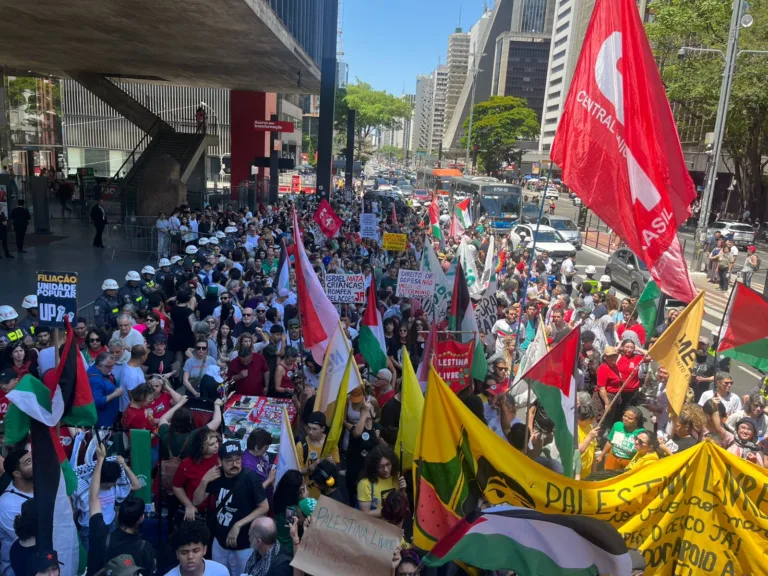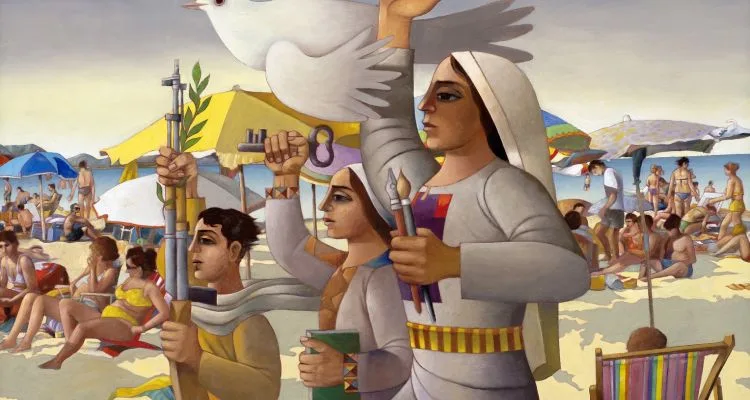
On Tuesday (7), the world looks back on two tragic years of genocide in the Gaza Strip. Violence of all kinds, alongside actions that make life in Palestinian territory unliveable, such as induced hunger and thirst, broken and fractured bodies that have no place in the world, and the destruction of homes and infrastructure, all contribute to the suffering of the Palestinian people. Violence of all kinds, alongside actions that make life impossible in Palestinian territory, such as induced hunger and thirst, broken and fractured bodies that have no medical assistance, and people condemned to confinement in a place where death can happen at any second, have become the daily routine for the powerless international community that has failed to stop Israel.
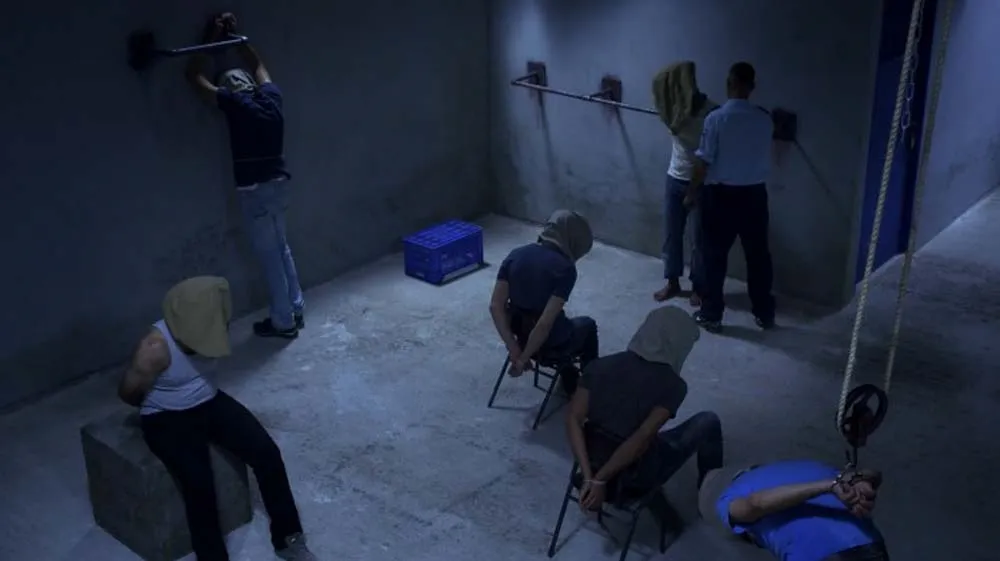
However, all the elements used by Israeli soldiers in Gaza were already being employed by Israel’s security forces in the dungeons of the country’s prison system, where Palestinians considered resistance to the occupation which the UN deems illegal are sent. Physical and psychological torture, torturing doctors, a starvation diet, lack of water or water available only in toilets, to humiliate, absence of sunlight, information from the outside world, and the right to a defense are some of the elements provided by the Israelis for these Palestinians.
BdF spoke to one of them, identified by the fictional name Hassan* to protect the identity of the young man who spent five years in the dungeons of Al-Moskobiya. The prison, famous for the ill-treatment of Palestinians, including children, served as a laboratory for the ongoing genocide in the Gaza Strip. Below is a rare glimpse into the reality experienced by about 10,000 of Hassan’s compatriots, who describe the experience as “the real definition of hell”:
BdF: What can you tell us about your time in prison?
Hassan: I was arrested twice. Once in 2017 and another time in 2019. I served almost 5 years in prison. The last time was from 2019 to 2023. I was released in mid-2023. And I moved. I was detained in many prisons. The main one is Al-Moskobiya, which is the interrogation center. It’s in Jerusalem. So, it’s good and bad. It’s bad because it’s an interrogation center that is underground, with no sun. The cells are like tombs, and there’s always torture, physical and psychological torture. But the good part about this place is that you are close to Jerusalem, to the Old City. We, as Palestinians, don’t have access. We don’t have the right, or rather, it’s not that we don’t have the right. We do have the right, but we don’t have access or permission to visit Jerusalem. So, at least we visit while handcuffed and blindfolded. At least it’s something; it means something to us.
Were you subjected to any torture?
I was subjected to torture and interrogation for over 3 months. And yes, I was physically tortured by the Shin Bet, the Israeli intelligence. During that time, I was interrogated. I finished the interrogation, went to prison, and was sentenced in a military court which, from our point of view as Palestinians, is an illegal court because there is no parliament that gives them laws to operate.
This military court is part of the occupation; the judge wears a military vest, not a black suit. No, he wears a military vest. The conviction rate in this military court is 99.7%. The conviction rate. So, you are guilty before you go to court. I was convicted on many charges, mainly for my role in opposing and organizing against the occupation, and I was sentenced to 4 years in prison.
During that time, I met thousands of Palestinian political prisoners who seek to fight against the prison system and also survive. Many people there try to exercise, play sports, and things like that. Many political prisoners are now writers and have a self-learning educational system.
Over time, after hunger strikes and years of struggle against the prison system, the prisoners managed to gain some rights. One of them is TV, radio, the right to receive family visits, and the right to better quality and quantity of food.
Over time, political prisoners managed to transform the prison from a place that could suppress you into a place that could motivate you and make you stronger and well-educated. It became a revolutionary political school. So, I think what makes the Palestinian political prisoner movement incredible and strong is the strong connection they have with each other, the solidarity, and the militant relationship they have to survive that time.
Unfortunately, after October 7th, everything I mentioned, like the rights that the prisoners gained through struggle, hunger strikes, and many martyrs who were killed in this process of struggle, all those rights disappeared or faded away. Now, each prisoner receives 500 calories of food per day. That’s all.
Only 500 calories a day? The WHO recommendation is 2,400…
Yes. If you see photos of them, how they enter and how they leave, it’s like the real definition of hell. If you want to imagine hell as a human being, just look at the Israeli prisons. If you want to imagine the suffering of any human being, just look at the Palestinian prisoners.
Now, many of the prisoners are being tortured daily for no reason. It’s not part of the interrogation. It’s just part of their desire to break people. They want to break their souls and their will so that they do not oppose the occupation in any way. Many of them have broken ribs, broken noses, broken hands. Many, many prisoners. So, after this October 7th, this idea of the prisoners’ organization…
All the political prisoners’ leaders from the factions are tortured and sent to solitary confinement. They don’t see any human being for years; they are just alone in their cells being tortured every day. And there is an existential threat to their lives because of the way the prison guards treat them daily.
They beat them every day. They don’t provide them with food or healthcare. There are many testimonies from Al-Moskobiya, which is the interrogation center in Jerusalem, that prisoners were forced to drink water from the toilet. They are trying to humiliate us in every way and by every means. There are prisoners who went to court, and you can see from their lips that they have been thirsty for days, that they haven’t drunk water because they are forced to drink water from the toilet. This shows how sadistic Israel’s prison judicial system is.
Do these prisoners know about these exchanges between Hamas and the Israeli government?
No, they don’t know the news; prisoners who were released didn’t know they would be released. The prison guards told them they would be transferred from prison B to prison A; they didn’t say they would be released and kept them in uncertainty until the last second. The prisoners have no defense, lawyers cannot visit them, with a few exceptions here and there. The Red Cross cannot visit them. Their families cannot visit them; the last time they saw their children was years ago. There is no radio or TV. The only way to receive news is through the guards. That’s the only way; it’s terrible.
There are prisoners there since 1988, and one of them told me something like: ‘I was in prison before the fall of the Berlin Wall or before the collapse of the Soviet Union, and I am still in prison. Look what happened in the world.’ There are political prisoners with high sentences, like life imprisonment or 25, 30 years. Most of them have been in prison for at least 20 years. Some for 25, others 30, 35 years.
What is their life like after being released?
Of the 600 who were released, 300 of them were released in the West Bank, and they are basically living in a situation where anything they do, even something social, can lead to a new arrest. Some who served 25 years in prison were released for 2 or 3 months and then arrested again.
In the West Bank?
Yes, in the West Bank. And some who were released for 2 or 3 months were massacred, bombed, and killed by the Israeli regime. Others were exiled outside of Palestine. They first went to Egypt.
Are they in exile by order of Israel or by their own will? Did they choose to leave?
No, Israel decided. It wasn’t them. They didn’t choose exile. They all wanted to stay where they lived with their families, because now they are in Egypt, and the Israeli Zionists did not allow their families to leave the West Bank to meet them. So, they are living alone in Egypt now.
In Egypt, they are living in a hotel provided by Egyptian intelligence, under the justification that Egyptian intelligence wants to protect the political prisoners from any threat. So, they live in a hotel, basically an open-air prison, because they cannot leave the hotel, except perhaps for 1 hour a week.
Only with authorization from the Egyptian order?
They need permission to leave. Of the 300, approximately 150 left Egypt for different countries, like 50 to Turkey, 30 to Malaysia, 2 to Spain. And yes, they are living in Egypt now in very difficult conditions. They cannot leave the hotel, and they cannot continue their lives and reunite with their families. After 25 years in prison, they still have to suffer more and more, living in a prison.