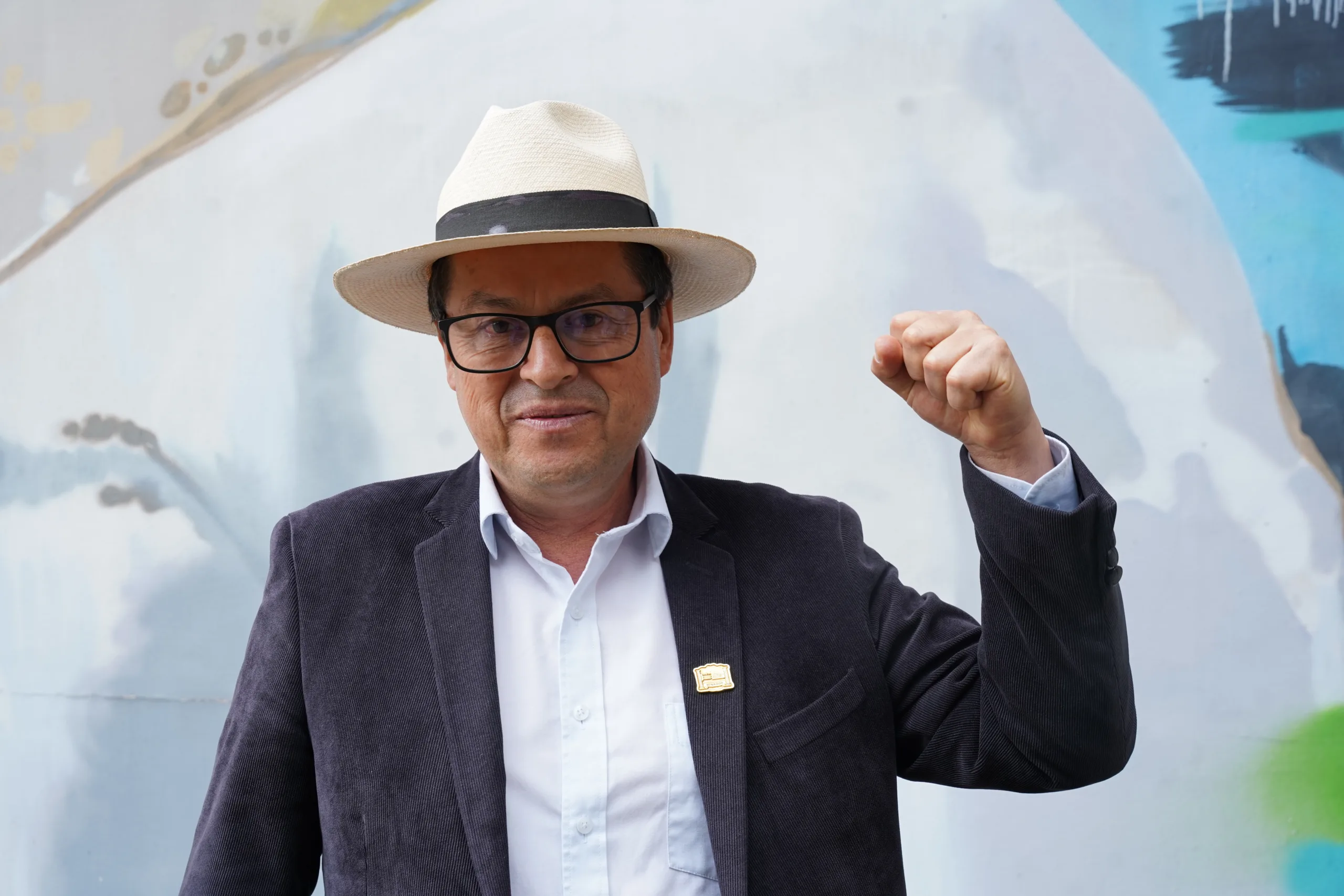
Senator Robert Daza can no longer travel freely across Colombia. He avoids, for instance, returning to the highlands of Nariño, where he was born. Paramilitary groups that target and intimidate rural leaders have made him a marked man. Yet, the congressman believes that one particular path could help resolve the chronic violence in Colombia’s countryside: agrarian reform.
Daza met with BdF reporters in a café in Bogotá. Despite the tense political climate, he doesn’t hesitate to say that Colombia’s right wing is responsible for two centuries of administrations that deepened inequality and concentrated land ownership.
For decades, violence has shaped the lives of Colombian peasants. According to reports from the Unit for the Victims and the Casa de la Memoria Museum, more than 50% of homicide victims in Colombia are rural workers. The group also represents more than 45% of the country’s internally displaced population.
A member of the Coordinador Nacional Agrario (CNA), one of the largest peasant movements fighting for agrarian reform, Daza acknowledges that the administration of President Gustavo Petro has made progress. Still, he says, tougher and broader measures are needed to establish a new model for land management.
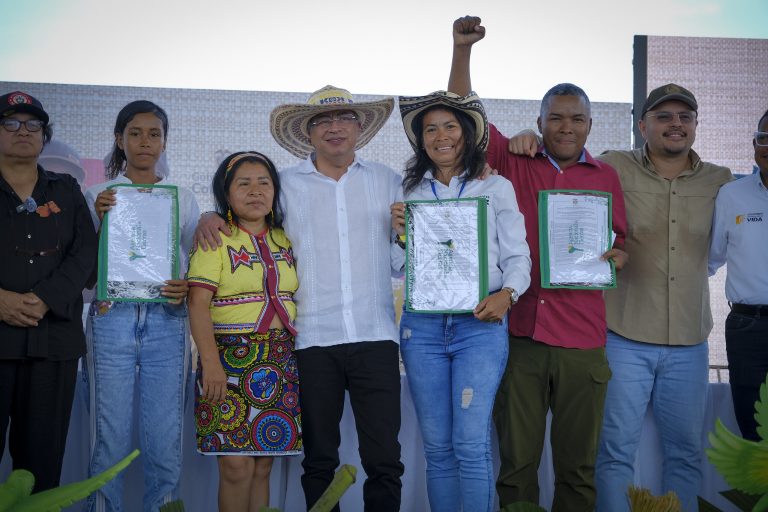
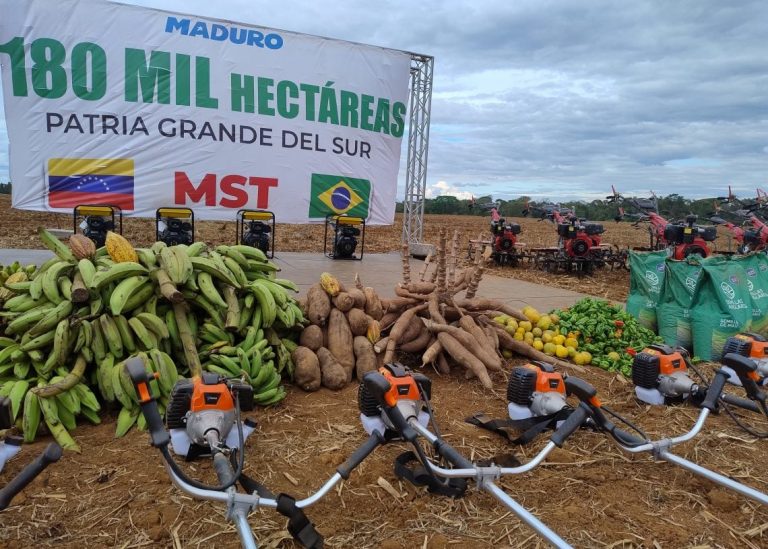
According to estimates by peasant organizations, more than 15 million hectares of land in Colombia need to be redistributed — including idle plots, areas linked to criminal activities, and lands with irregular ownership. Over the past three years, the government has managed to redistribute only about 500,000 hectares. Daza attributes the slow pace to the political power of the Colombian right, particularly in decision-making spaces such as Congress.
The senator argues that agrarian reform cannot be reduced to a mere redistribution of land; it must be part of a broader policy that places peasants at the center of national debate.
“When we talk about a comprehensive and popular agrarian reform, we mean that, together with the land, the Colombian State must guarantee all the necessary support for food production. Food sovereignty must become a reality hand in hand with agrarian reform. Along with it, policies to support peasant production must be implemented,” Daza told BdF.
The type of support he refers to is a long-standing demand of rural movements across different sectors — from production to trade and processing — carried out by the peasants themselves. That, he says, requires fostering and strengthening peasant organization. One of the main obstacles to such reforms remains Colombia’s entrenched right wing.
President Petro forged alliances with social-democratic and liberal sectors not only to win the 2022 elections, but also to secure approval for several of his proposed reforms. Looking ahead to next year’s elections, Daza declined to say whether the president will need to seek new alliances to maintain power, emphasizing instead that Colombia’s institutional framework prevents Petro from being as radical as some expected.
“No revolution has been made — and it’s impossible to make one within this institutional framework, bound by the Constitution, the law, regulations, and oversight from the courts, the Constitutional Court, the Council of State, and the Attorney General’s Office,” he said.
Daza believes that the election of Colombia’s first left-wing president was made possible not only by social movements and progressive organizations but also by the guerrilla groups that have fought for more than 60 years for revolutionary change in the country.
“Sixty years of armed struggle built the momentum that made it possible to reach the presidency — if not with a majority, at least with a parliamentary bloc capable of contesting power. We have advanced in this political struggle, not only due to the guerrillas’ existence but also to the growth of the social and democratic alternative movements. The guerrillas helped lay the groundwork for the political strength we now have in Colombia,” he said.
The full interview is available in Portuguese here.