BdF and the Latin American news agency Prensa Latina held a meeting in the Cuban capital to strengthen their strategic partnership. The initiative represents a shared commitment to exchange journalistic experiences and content that, with an authentic voice, portrays the reality of the Global South from a perspective rooted in truth, social justice, and the struggles of the peoples.
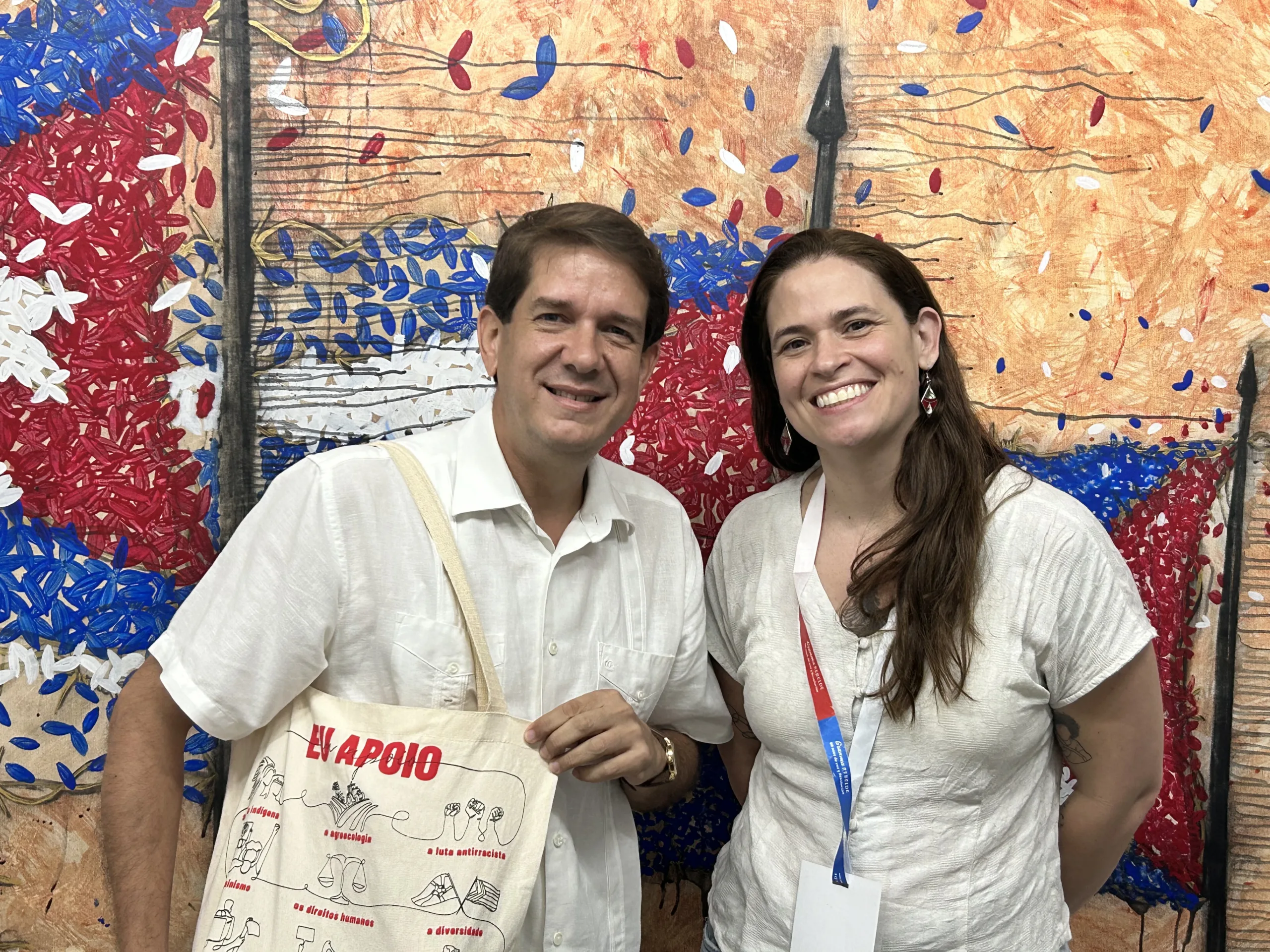
The meeting took place on Saturday (18) with the participation of BdF’s executive director Nina Fideles and Prensa Latina’s president Jorge Legañoa Alonso, during the “Granma-Rebelde: 60 Years of Voice and Revolution” festival. The event brought together around 20 Cuban and international media outlets to celebrate six decades of Cuba’s newspapers Granma and Juventud Rebelde.
During the meeting, both Fideles and Legañoa Alonso emphasized the strategic importance of building collaborations that strengthen unity among progressive media outlets to expand the circulation of critical analysis and debate. They noted that this effort takes place in a global context where the massive spread of fake news is routinely used as a political weapon by right-wing sectors.
According to BdF’s executive director, deepening the partnership is a key step to broaden the exchange of information and analysis produced in Brazil from a popular perspective, allowing it to reach audiences in other countries. It also strengthens BdF’s mission to portray international realities through a grassroots lens and to share with readers the ongoing solidarity that the Cuban Revolution offers to peoples around the world.
Prensa Latina
The Prensa Latina agency currently operates 39 bureaus across different regions of the world. It was founded on June 16, 1959, just months after the triumph of the Cuban Revolution, under the initiative of Fidel Castro and Ernesto “Che” Guevara. The creation of the outlet responded to the need to counter the media blockade and misinformation spread by major international news agencies about Latin America, the Caribbean, and the revolutionary process unfolding in Cuba.
At its founding, the agency was led by Argentine journalist Jorge Ricardo Masetti. Prensa Latina was a pioneer in broadcasting news from a Latin American and Caribbean perspective. Over more than six decades, it has witnessed and narrated the region’s history, from the Cuban Missile Crisis in 1962 and the exposure of human rights violations under the Conesur dictatorships, to the struggles of social movements and the advancement of regional integration processes such as the Bolivarian Alliance for the Peoples of Our America (Alba) and the Community of Latin American and Caribbean States (Celac).