

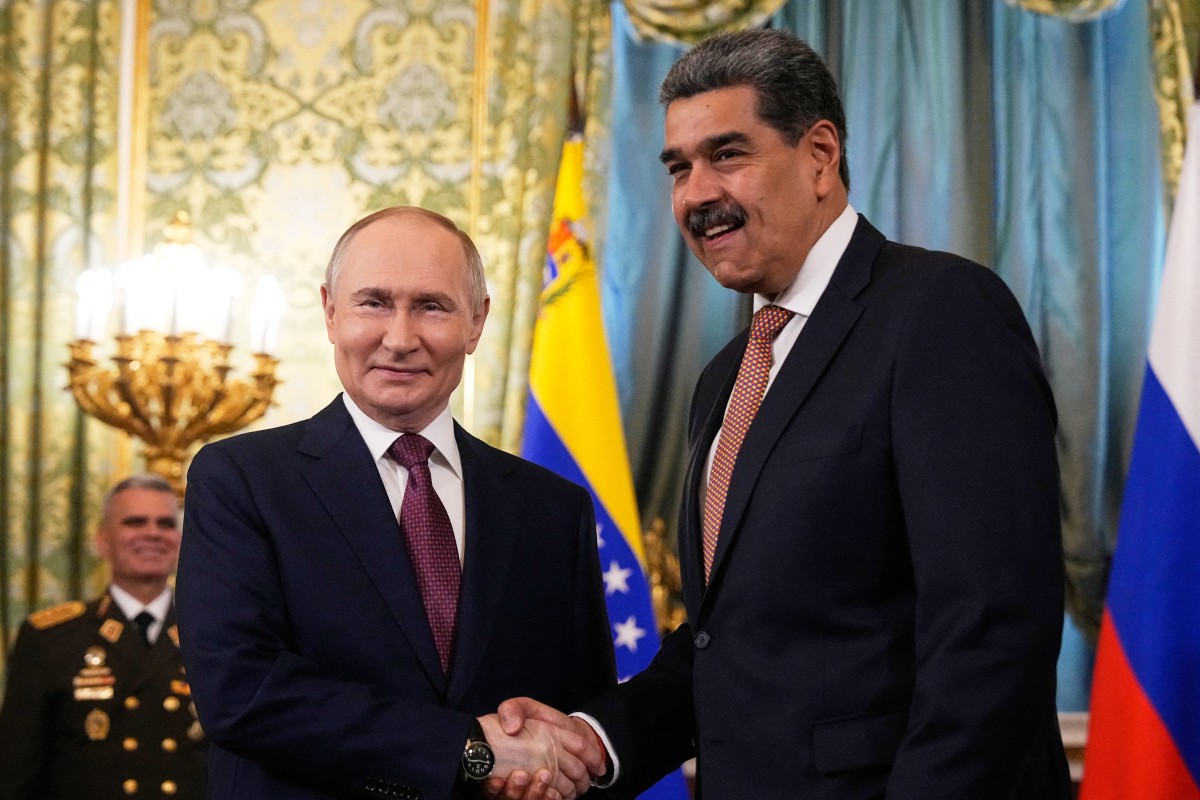
Russian Foreign Minister Sergey Lavrov said on Tuesday (11) that Moscow has not received any request from Caracas for military assistance in response to U.S. operations in Venezuelan territorial waters.
“No, we have not received any such request,” the minister said at a press conference with Russian media, when asked whether Caracas had made a request similar to those addressed to Belarus, a neighbor and ally of Moscow in the context of the war in Ukraine.
“I believe it is inappropriate to compare our relations with Belarus, which is part of the Union State and with whom we share synchronized and coordinated positions on key international security issues, to our relations with Venezuela, a friendly country and a comprehensive strategic partner, as recently defined in an agreement we signed,” he added.
Earlier, The Washington Post, citing internal U.S. government documents, reported that Venezuelan President Nicolás Maduro had requested military assistance from Russia, China, and Iran. According to the publication, Maduro allegedly contacted Vladimir Putin to ask for missiles, radar systems, and modernized aircraft.
Lavrov denied that Venezuela had made such a request but emphasized that Russia intends to guide its relations with the country based on the commitments established in the strategic partnership agreement signed on May 7 of this year. The agreement, he said, is expected to enter into force in the coming days.
The ten-year accord provides for closer political and economic cooperation between Moscow and Caracas, including in the fields of energy, mineral extraction, transport, and communications. It also includes collaboration in security matters and in combating terrorism and extremism.
The document states, among other points, that Moscow and Caracas oppose unilateral sanctions that violate the United Nations Charter and other universally recognized principles of international law.
President Vladimir Putin ratified the strategic partnership agreement with Venezuela on October 27. Under the established procedure, it will enter into force once both parties have notified each other in writing of the completion of their internal procedures.
Lavrov also reiterated “the unacceptability” of the U.S. using the pretext of a “war on drugs” to threaten Venezuela.
“I cannot conclude my comments on Venezuela without mentioning our position on the unacceptability of the actions that the United States is taking under the pretext of combating drug trafficking,” Lavrov said.
Earlier, Russian Foreign Ministry spokesperson Maria Zakharova stated that Moscow remains in contact with Venezuela’s leadership amid growing tensions in the Caribbean and is prepared to respond to any requests from Caracas.
Kremlin spokesperson Dmitry Peskov also said that U.S. actions toward Venezuela must comply with international law and reaffirmed Russia’s support for the South American nation’s sovereignty.
