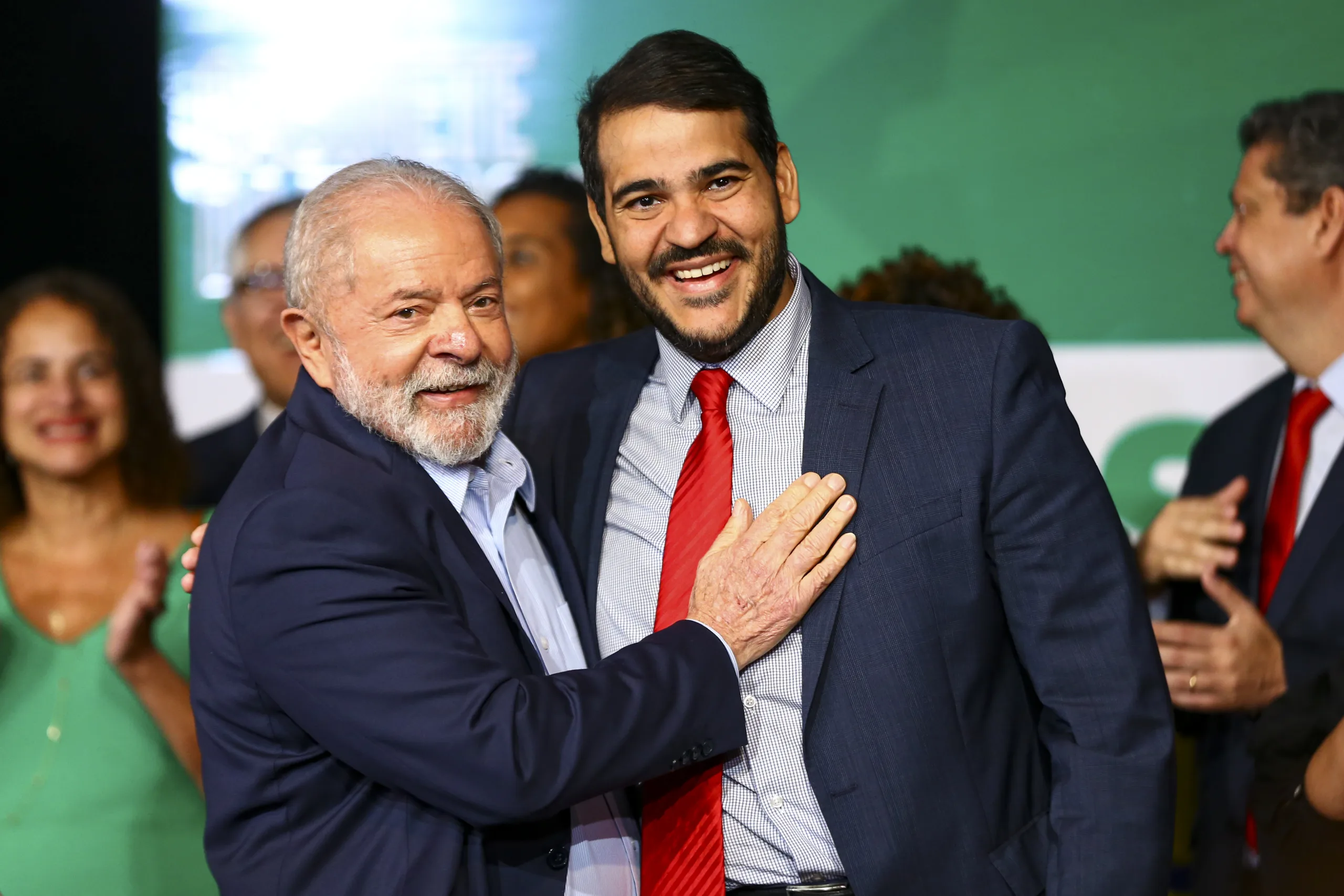
The Brazilian government formally nominated Jorge Messias on Thursday (20) to fill a vacancy on the Supreme Federal Court (STF). If approved by the Senate, Messias will take the seat previously held by Luís Roberto Barroso, who retired in October.
Following the nomination, Messias must face a confirmation hearing before the Senate’s Constitution and Justice Committee, followed by a vote in the full chamber.
An evangelical Christian, Messias is regarded as a key liaison between the Lula administration and evangelical sectors. He was the only high-ranking government official to attend this year’s March for Jesus, one of the largest evangelical events in Brazil. Since January 1, 2023, he has served as Attorney General of the Union (AGU).
Messias was widely viewed as a “natural choice” for the post, given his loyalty to President Luiz Inácio Lula da Silva and his extensive experience in federal administration, including his time under former President Dilma Rousseff.
Who is Jorge Messias?
A career civil servant at the Attorney General’s Office, Messias topped a shortlist of six names submitted by his peers as recommendations for leadership positions and was ultimately chosen by Lula.
He previously served as an advisor to former President Dilma Rousseff, and also worked at the Ministries of Education and Science, Technology and Innovation, as well as serving as a prosecutor for the Central Bank.
Messias gained public attention after being mentioned as “Bessias” in an illegally intercepted phone call between Dilma Rousseff and Lula during the Operation Car Wash (Lava Jato) investigation, which was later made public by then-judge Sérgio Moro.
In his doctoral thesis, Messias criticized neoliberalism and argued for a strong state capable of addressing global risks such as financial crises and climate change. He also examined issues such as the power of Big Tech corporations, the legal framework for Indigenous land rights, and LGBTQ+ protections, reflecting a broad engagement with social and political topics.
Though a member of the Baptist Church, Messias’ support extends beyond the evangelical bloc, and his loyalty and public spirit are cited by allies as key qualities for his potential role on Brazil’s highest court.