

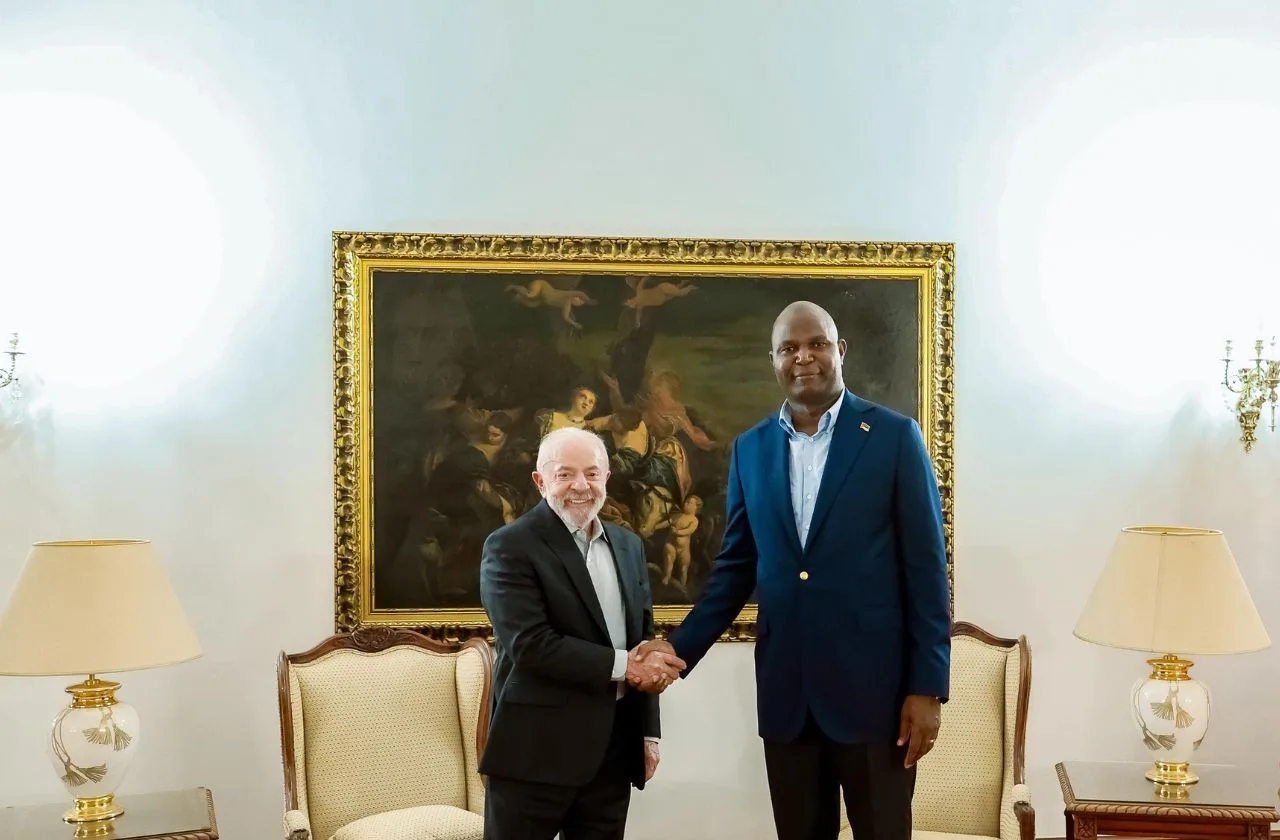
Brazilian President Luiz Inácio Lula da Silva and Mozambican President Daniel Chapo signed nine bilateral cooperation agreements on Monday (24), covering humanitarian assistance, health, education, food security, agriculture, biofuels, defense, trade, and investment.
The visit, held as Mozambique celebrates 50 years of independence, was framed as a symbolic “restart” of the relationship between the two nations, a partnership that Lula described as having “slept for too long.”
“In the words of the great Mozambican writer Mia Couto, our friendship has wandered in a somnambulant state for many years,” Lula said. “Absorbed by our own challenges, we drifted from brotherhood to indifference. Twenty years ago, we woke up. Brazil, once turned away from Africa, reconnected with Mozambique. Yet soon after, we fell back into a deep sleep.”
Lula said the purpose of his visit was to “awaken once again” and ensure the partnership does not fade. “My visit to Mozambique marks the restart of a story that should never have stopped being written,” he declared. “I came here to say to you, President, and to the Mozambican people: Brazil is back. We want to cooperate with Mozambique in every area, industry, science and technology, agriculture, energy, especially in two vital fields for humanity: health and education.”
Agreements and structural financing
Among the nine signed agreements, key highlights include strengthened cooperation in agriculture, particularly in cotton production and productivity across the African savanna through Brazil’s Agricultural Research Corporation (Embrapa), and renewed education programs such as the Postgraduate Student Agreement Program (PEC-PG) and the expansion of Unilab, the university founded under Lula’s administration to integrate Portuguese-speaking African nations.
The central economic theme was financing. Lula pledged to revive Brazil’s capacity to fund international projects, signaling the return of the National Development Bank (BNDES) to support major infrastructure ventures such as ports, roads, and power plants essential to Mozambique’s growth.
“No major country can export services without providing credit,” Lula said. “We are working for BNDES to recover its ability to finance the internationalization of Brazilian companies.”
Bilateral trade between the two countries reached US$40.5 million in 2024, led by Brazilian exports of poultry and cosmetics, while Mozambique’s main exports to Brazil were tobacco products. A business seminar with around 150–200 entrepreneurs aims to diversify trade toward industry, innovation, and health.
Security and climate at the core
Energy transition and the fight against climate change, issues of particular importance for vulnerable Mozambique, were central to the agenda. Lula underscored cooperation on biofuel production and forest protection, including preservation of the Miombo woodland ecosystem.
The two countries also agreed to deepen security cooperation against organized crime and money laundering, with Brazil’s Federal Police offering technical assistance to help dismantle criminal networks.
Lula is also expected to take part in a business forum and will receive an honorary doctorate from the Pedagogical University of Maputo before concluding his visit.
