The technologies that connect billions of people around the world are, in reality, in the hands of a tiny group of the ultra-rich. According to a new Oxfam report released last Sunday (19) during the World Economic Forum, six billionaires control nine of the world’s ten largest social media platforms, while three billionaires concentrate nearly 90% of the global market for artificial-intelligence chatbots. The organization warns that this digital power, amassed by a small minority, not only generates enormous profits but is also being used to restrict freedoms, surveil opponents, and manipulate public debate.
For Oxfam, the expansion of artificial intelligence and digital platforms is not fostering greater freedom or inclusion. “When controlled by a billionaire elite, these technologies cease to be democratic tools and become mechanisms for concentrating wealth and power,” states the report Resisting the domination of the rich.
The executive director of Oxfam Brazil, Viviana Santiago, describes this process as a concrete threat to democracy. “It is urgent to rethink who owns social media and AI tools, because there is an ongoing attempt to control narratives, reinterpret history, and limit access to information,” she told BdF. According to Santiago, the lack of regulation in the technology and AI sectors creates an ideal environment for widening inequalities. “These are highly profitable, highly polluting sectors with enormous power for censorship and surveillance,” she said.
Surveillance, censorship, and disinformation
The report highlights that the billionaires who control the largest social media platforms also control what billions of people see, say, and hear. Oxfam draws attention to the role of these platforms in monitoring and repressing political opposition, citing Kenya as an example: during protests against new tax laws, Kenyan authorities used X (formerly Twitter) to track demonstrators.
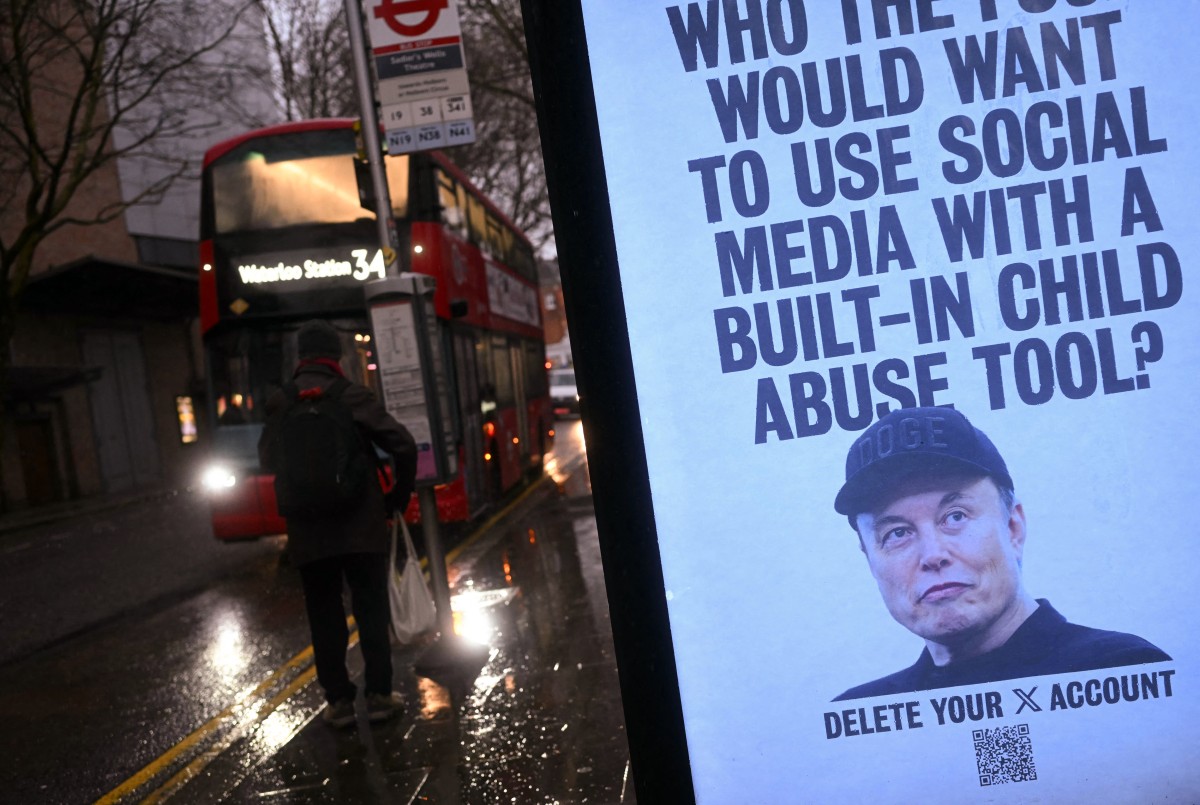
The platform, owned by Elon Musk, is cited in the report as an example of how private power can threaten collective rights. A study by the University of California referenced in the document found that hate speech increased by 50% after Musk acquired X in 2022.
Oxfam also denounces the use of platforms to spread disinformation, intimidate critics, and preserve privileges. “These networks, under billionaire control, are not just companies. They have become political actors with the capacity to repress, censor, and distort public debate,” the report concludes.
Three billionaires dominate AI
Beyond social media, control over artificial intelligence is even more concentrated: three billionaires control nearly 90% of the global chatbot market, software that simulates human interaction and is widely used in customer service, search platforms, and social networks. Oxfam warns that this concentration heightens the risk of large-scale manipulation, especially given the absence of clear rules governing these tools.
For Viviana Santiago, the capture of these technologies by major fortunes serves a long-term strategy: shaping the collective imagination and protecting structures of domination. She criticizes the fact that these sectors largely operate without regulation and warns about the environmental impact of their business models.
“These sectors concentrate power, generate inequality, and have an enormous carbon footprint. We cannot treat as neutral the fact that billionaires control these tools and the means of communication,” she said.
Davos forum remains silent on digital power concentration
Oxfam released the report alongside the opening of the World Economic Forum, held from January 19 to 23 in Davos, Switzerland. The 2026 edition brings together around 400 high-level political leaders and 850 CEOs of major corporations, as well as nearly 100 major unicorns and technology pioneers. The forum’s official theme is “A spirit of dialogue.”
President Luiz Inácio Lula da Silva is not attending the forum this year. Brazil is represented by Planning Minister Simone Tebet, who is expected to take part in a panel on growth in Latin America. Since the beginning of Lula’s third term in 2023, Brazil has been represented in Davos by cabinet ministers.