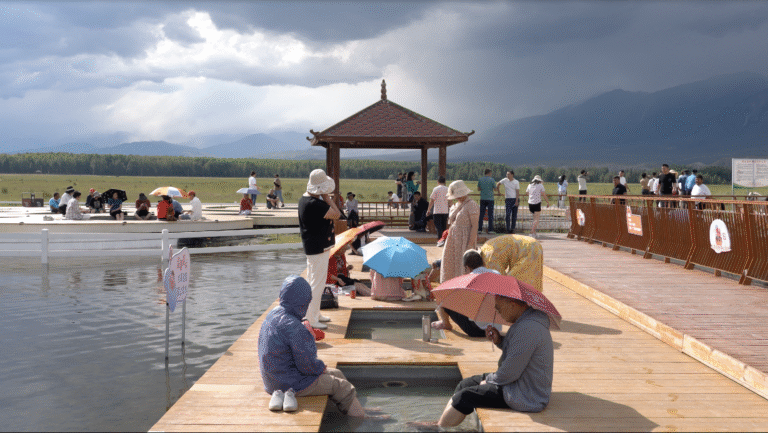
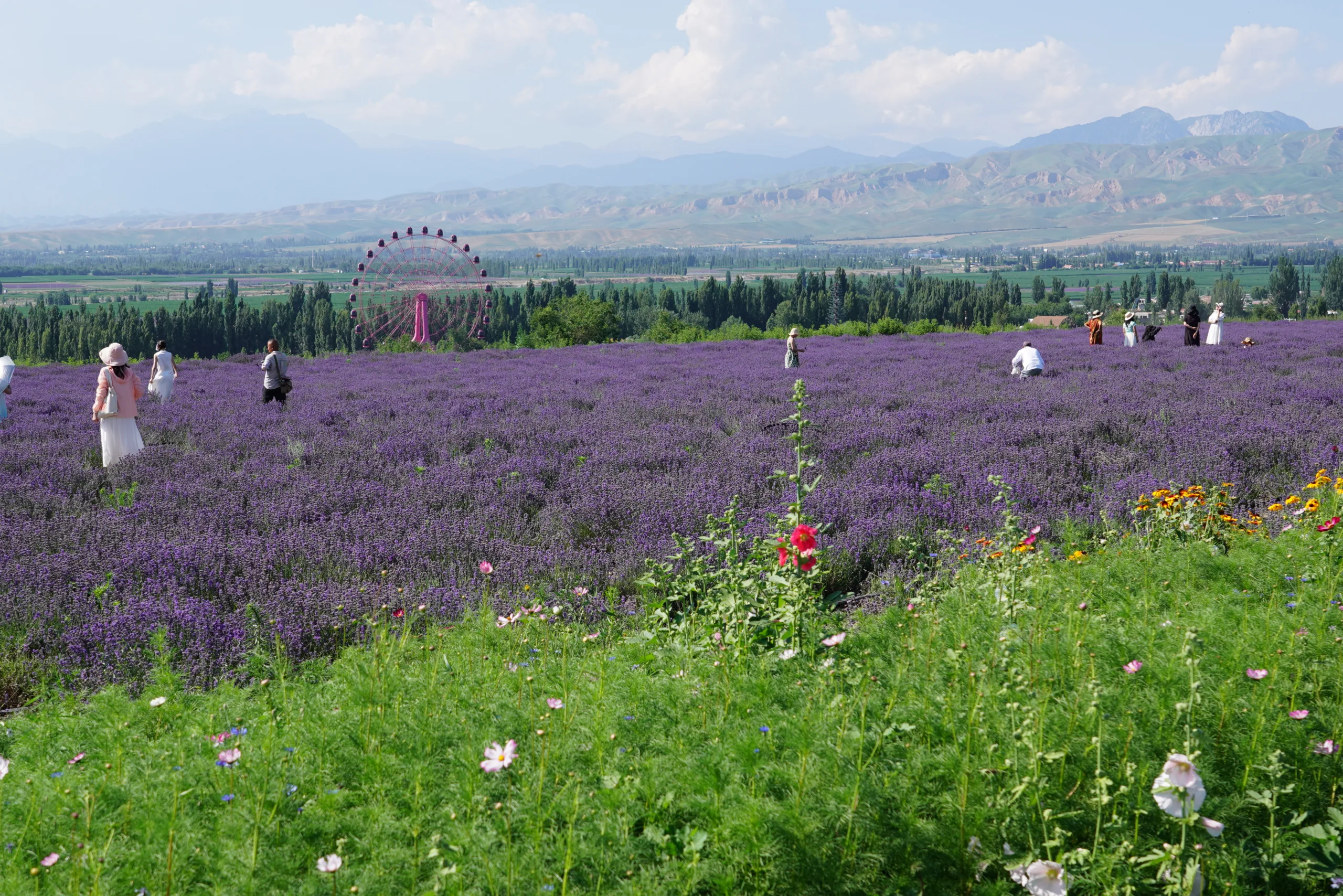
Sigong village, located in the Xinjiang Uyghur Autonomous Region in western China, has reshaped its rural economy through lavender farming and the development of community-based tourism. Today, the area is recognized nationally as a hub for the aromatic plant.
The initiative began in 2009, when five farmers experimented with the crop. Over the years, the project expanded to include 62 family-run guesthouses and a system that integrates farming, processing, and rural tourism.
From rocky soil to lavender fields
Sigong lies in Lucaogou township, Huocheng county, within the Ili Kazakh Autonomous Prefecture. According to Nigaran Abdunabi, director of the village’s Rural Development Center, the land once faced serious challenges.
“When the mountain snow melted, it caused floods that brought stones and washed away farmland. The soil was shallow and rocky, leaving local households with barely half the income of nearby villages,” Abdunabi explained.
Seeing the potential of lavender cultivation in the area, local authorities encouraged its planting in 2009. The turning point came when the project expanded beyond cultivation to include processing and rural tourism.
Integration sparks growth
In 2019, a young entrepreneur invested 600,000 yuan (about US$ 83,000) to open Sigong’s first family inn. “She recovered her entire investment in just three months,” Abdunabi recalled. The success inspired others: today, the village hosts 62 guesthouses operated by both outside investors and local farmers.
Wang Haipeng, founder of the Fuxiang Study and Experience Center in Sigong, said the strategy connected agriculture with industry and services. “Since we began developing tourism in 2019, lavender farming has improved, and the flowers sell more easily. More people come to see them and buy our products,” he explained.
The project goes beyond scenery. “Our idea is that lavender products shouldn’t just be luxury items. We want to spread the culture of lavender so it becomes part of everyday life,” Wang said. Visitors can take part in educational experiences, such as harvesting lavender for a day and learning the processing steps.
Rural revitalization in practice
Today, Sigong’s local economy includes lavender oil, incense, and other products alongside hospitality and food services provided by rural families. The structural improvements followed the economic boom: roads, sewage and water systems, street lighting, and gardens have all been upgraded.
“The biggest change in recent years is that there are more people living in the village again. In the past, there were mostly elderly residents, what we called the ‘left-behind seniors,’” Abdunabi noted.
The project illustrates how China’s broader Rural Revitalization Strategy functions in practice, consolidating the elimination of extreme poverty, raising incomes, and improving living conditions in the countryside.