Labor auditors from Brazil’s Ministry of Labor and Employment (MTE) rescued 586 workers subjected to slave-like conditions at a construction site for an ethanol plant in Porto Alegre do Norte, in the state of Mato Grosso, central-western Brazil.
The operation, which began on July 20 and concluded on Tuesday (7), was carried out by the Mobile Inspection Task Force (GEFM) and the Regional Superintendence of Labor and Employment in Mato Grosso (SRTE/MT), with support from the Federal Prosecutor’s Office for Labor Affairs (MPT) and the Federal Police.
Fire revealed degrading conditions
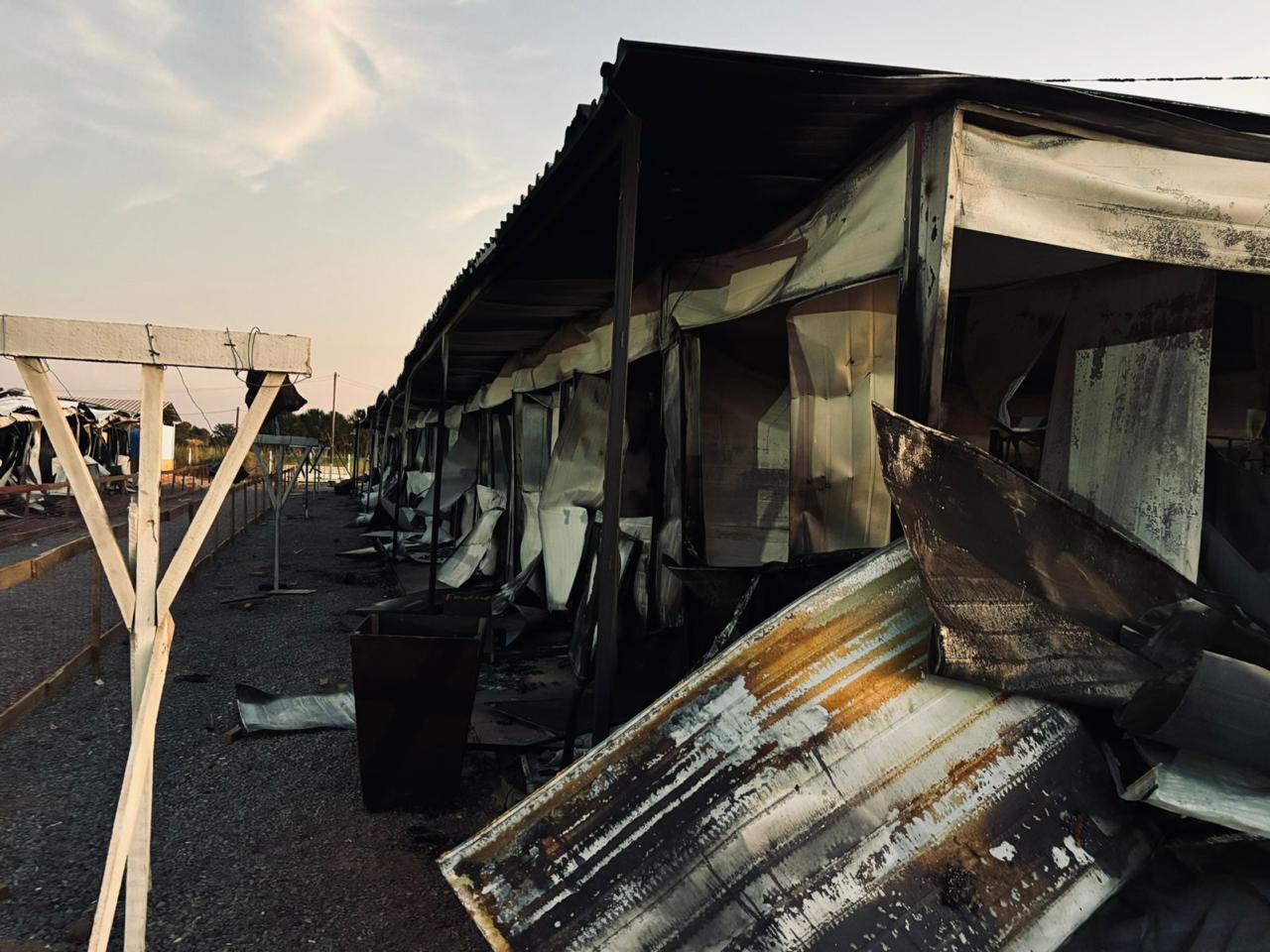
The investigation started in July 2025, after a fire broke out in the makeshift dormitories where workers lived. According to inspectors, the lodgings were overcrowded, lacked regular access to water and electricity, and had extremely poor hygiene conditions. At one point, the company even used untreated river water to supply the tanks.
During the fire, Military Police (PM) arrived before firefighters and, according to testimonies, fired rubber bullets and threatened workers, many of whom lost their belongings and personal documents. Some were detained for up to three days.
After the incident, 17 workers were dismissed “for cause,” even though labor inspectors found no evidence linking them to the fire.
Informality and systemic rights violations
According to labor auditor Flora Pereira, who coordinated the operation, the case stood out both for its complexity and for the lack of formal procedures at every stage of the labor relationship, from hiring to dismissals.
“The inspection began as an effort to investigate what had happened to the workers after the fire in their housing. When we arrived in Porto Alegre do Norte, we encountered a very precarious situation. Workers were in degrading conditions, many sleeping on mattresses on the floor, without beds or bedding,” Pereira explained.
She added: “It was one of the most complex operations of recent years, not only because of the number of victims, but also due to the complete absence of formal records and the systematic violation of labor rights.”
Number of rescues rises to 586
The workers had been hired by TAO Construtora to build an ethanol plant for the agribusiness company 3tentos. BdF first reported the case in early August, when 563 workers were rescued. But as the operation continued, inspectors identified further irregularities involving 23 more workers, raising the total to 586.
The increase came after auditors uncovered a clandestine system to conceal unpaid overtime, known among workers as the “ponto 2” (“second timecard”). Between February 2024 and July 2025, the company failed to pay millions in legally mandated benefits, including severance funds, vacation pay, the mandatory “13th salary” bonus, and weekly rest days.
“We found evidence of exhausting work schedules, confirmed by off-the-books payments amounting to more than R$ 3.9 million (about US$ 720,000). Over 177,000 overtime hours had been worked but were not recorded in the company’s official system. That’s why the initial number of 563 rescues rose to 586,” Pereira noted.
According to the MTE, workers reported shifts as long as 16 hours a day, including Sundays. One truck driver said he worked from 5 a.m. to 9 p.m., with only one hour for rest.
The labor inspectors ordered companies to pay R$ 7.7 million (about US$ 1.4 million) in severance, back pay, and damages. The 17 “for cause” dismissals were overturned, and all workers received access to unemployment insurance, paid in three monthly installments of the minimum wage.
Workers’ profile and recruitment
Of the 586 rescued, 96% identified as Black. Only three were women, all working as cooks. Most workers had been recruited informally in the northeastern states of Maranhão, Bahia, and Piauí.
“The workers had to pay their own travel and food costs to get to Porto Alegre do Norte. Their work cards [the official employment record in Brazil] were only signed once they arrived. Sometimes the workers paid upfront, and other times the company advanced the costs and then deducted them from the first wages. We demanded reimbursement for these expenses,” Pereira said.
Since 1995, Brazil’s Mobile Inspection Task Force has freed over 68,000 workers from slave-like conditions nationwide.
Company responses
When BdF first contacted 3tentos in August 2025, after the initial rescue, the company stated it had adopted “a series of measures to investigate the facts and assess appropriate actions.”
“We value the dignity of all people involved in our operations, whether directly or indirectly. Practices that violate human and labor rights are incompatible with our company’s values. We reaffirm our commitment to transparency, safety, and respect in all our operations,” the statement said.
TAO Construtora also released a note in August 2025, claiming it had cooperated with the inspection from the start and stressing that “to date, no formal charges have been issued against the company.”
“The company signed an emergency and reparatory Conduct Adjustment Agreement (TAC) with the Labor Prosecutor’s Office, without admitting guilt, as a way to provide immediate support to workers and maintain its commitment to transparency and dialogue. TAO Construtora vehemently rejects any practice resembling slavery or human trafficking,” the note stated.
BdF contacted both companies again after the number of rescued workers rose to 586. As of publication, neither company had responded. The space remains open for further statements.