In Shanghai’s Changning District, the share of women on the Chinese People’s Political Consultative Conference (CPPCC) district committee rose from 39.75% in 2021 to 42.58% in 2024. Among district People’s Congress deputies, women’s representation increased from 36.4% to 41.86% over the same period. At the grassroots level, women now hold 69.19% of neighborhood committee director posts and 59.6% of residential Party organization secretary roles.
These gains are closely tied to the development of China’s Whole-Process People’s Democracy, a socialist governance concept emphasizing participation at every stage of decision-making.
On November 2, 2019, during an inspection in Hongqiao Subdistrict, Changning, President Xi Jinping said that “people’s democracy is a whole-process democracy,” in which major legislative decisions follow due procedures, broad deliberation, and scientific, democratic decision-making. In 2015, Hongqiao launched China’s first grassroots “legislative liaison station.” By September 2024, more than 47,000 participants had contributed input on 109 draft laws, submitting 4,984 suggestions, 408 of which were adopted by the national legislature.
A recent State Council white paper, “China’s Achievements in the All-Round Development of Women in the New Era,” notes that women’s representation in people’s congresses at all levels continues to rise. The 14th National People’s Congress (NPC), convened in 2023, includes 790 women (26.5% of deputies). While not at parity, this exceeds the global average (26.07%) and is well above Brazil’s Chamber of Deputies (18.1%). At subnational levels, women comprise 31.64% of district deputies and 32.36% of municipal deputies, and NPC women deputies submitted 29,328 suggestions between 2018 and 2025 (42.3% of all proposals).
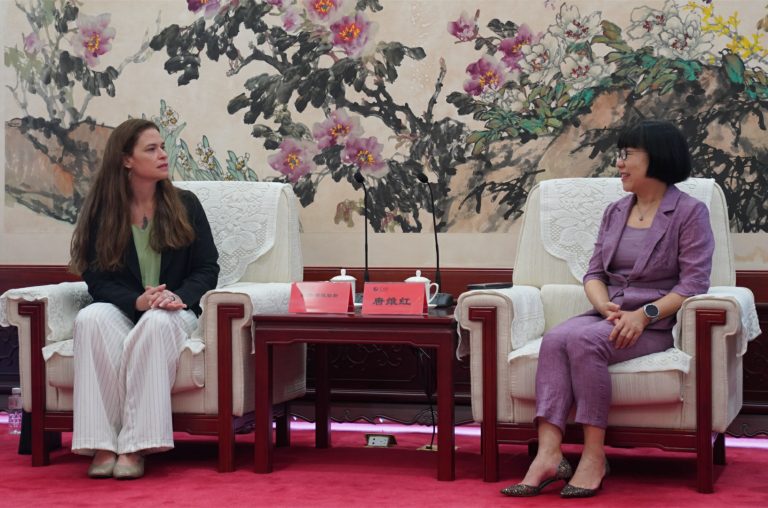
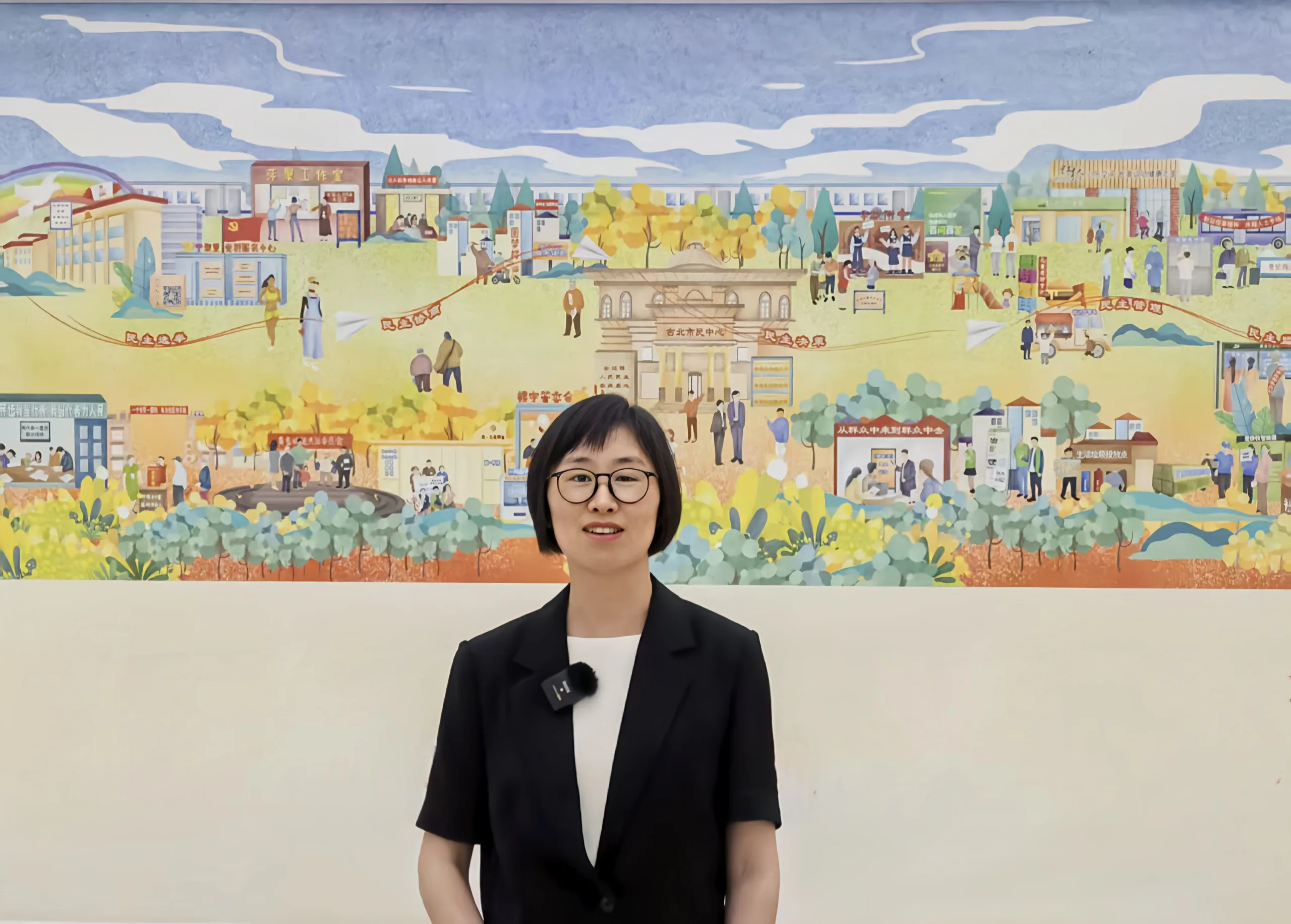
Below, Gu Jieyan, vice mayor of Changning District and head of the District Working Committee on Women and Children, speaks with BdF about how whole-process democracy is widening women’s participation.
Interview highlights
BdF: “Whole-Process People’s Democracy” is a relatively new term in China’s governance vocabulary. What does it mean?
Gu Jieyan: It’s a people-centered, uniquely Chinese form of democracy that covers every link and stage, before, during, and after decisions. People participate by giving opinions, taking part in decision-making, exercising oversight, and evaluating outcomes. For women and children’s work, this framework directly supports gender equality, ensuring women can participate on an equal footing throughout the process.
A concrete example is our Hongqiao legislative liaison station (established in 2015, the first in China). It gives women a direct channel to the legislature. Up to September 2024, it gathered opinions on 109 draft laws, with 4,984 suggestions submitted and 408 adopted, involving 47,086 total public interactions. The Law on the Protection of Women’s Rights and Interests underwent three rounds of consultation, community outreach, online and offline hearings, and text refinement after the second review—aligning the law with public concerns.
What channels do women in Changning use to take part in grassroots governance?
Women have become a major force in social governance. Their representation in the district CPPCC rose to 42.58% (2024). Among district People’s Congress deputies, women increased from 36.4% to 41.86%; on the standing committee, from 31.03% to 44%. Women deputies submitted 46.79% of all suggestions and led 51.6% of proposals, só it’s not just more seats, but higher quality participation.
Two of our NPC deputies are nationally recognized. One, often called the “People’s Premier,” Zhu Guoping, served three terms and put forward widely cited proposals grounded in community needs. Another, born in the 1980s, is a local Party secretary and women’s federation chair who shared Changning’s grassroots democratic practices in the “Deputies’ Corridor” during this year’s Two Sessions.
At the community level, in our 189 neighborhood committees, women hold 69.19% of director posts and 59.6% of residential Party secretary posts, institutional anchors for women’s role in governance. Women also lead civil society: 66.88% of registered social organizations are headed by women, and 48.25% list women as legal representatives, key to bridging government and residents.
You’ve identified six priority areas for women’s development in Changning. What progress stands out?
Based on Shanghai and national plans under the 14th Five-Year Plan, we set 33 core targets and 25 measures across six areas: political & social participation; economic participation; science, education & culture; physical & mental health; family building; and rights protection. All core targets have been met as of mid-2024, with some indicators leading citywide.
Women’s participation in public affairs keeps rising (e.g., CPPCC women members: 42.58%). Women’s urban employment share is steady around 43%. Senior professional roles are roughly 50/50 by gender. Women’s life expectancy stays above 86 years, and maternal mortality remains at developed-country levels. Public mother-and-infant facilities maintain 100% coverage. A recent satisfaction survey showed 94.72% of women are satisfied with development outcomes in these six areas.
How do women’s deliberation platforms operate in communities?
Each of our 189 residential communities has a Women’s Deliberation Platform, with a physical “Women’s House” and an online portal. Women submit needs and proposals (including via QR codes), which are then coordinated and addressed. We also built an expert pool (law, social affairs, etc.) to improve problem-solving and refined rules of deliberation for sustainable operation. Some communities formed issue-specific women’s deliberation teams to deepen focus and effectiveness.
Could you share concrete examples of women-led community governance?
One neighborhood had a 400m² derelict lot. Through the women’s consultation platform, we held 20+ rounds of meetings with residents who weighed options (parking, fitness, etc.). The community co-designed a biodiversity garden, the city’s first Shenjing Garden (2019), integrating pollinator habitat, rainwater capture, green carbon sinks, health therapy, and nature education. Residents formed a volunteer team to maintain it, turning a vacant space into a consensus-built commons that strengthens social ties.
Another example relates to family building, a national priority. We support “Most Beautiful Families” selections, mediate household disputes, encourage volunteer service, and run “Big Hands Hold Little Hands” programs. One young resident, also an intangible cultural heritage inheritor, built a harmonious home, runs family reading rooms, leads rapid donation drives after disasters, and was later elected homeowners’ association chair. Her trajectory shows how strong families underpin strong communities, linking the “small family” to the “big family” of society.
What do these experiences tell us about whole-process democracy and women’s roles?
They show that participation at every stage, from drafting laws to neighborhood decisions, raises both the quantity and quality of women’s engagement. Institutional design (seats, platforms, consultation cycles) plus everyday democratic practice (community problem-solving, family education, civil society leadership) is expanding women’s voice, agency, and leadership across governance in Changning.
Read the full interview in Portuguese.