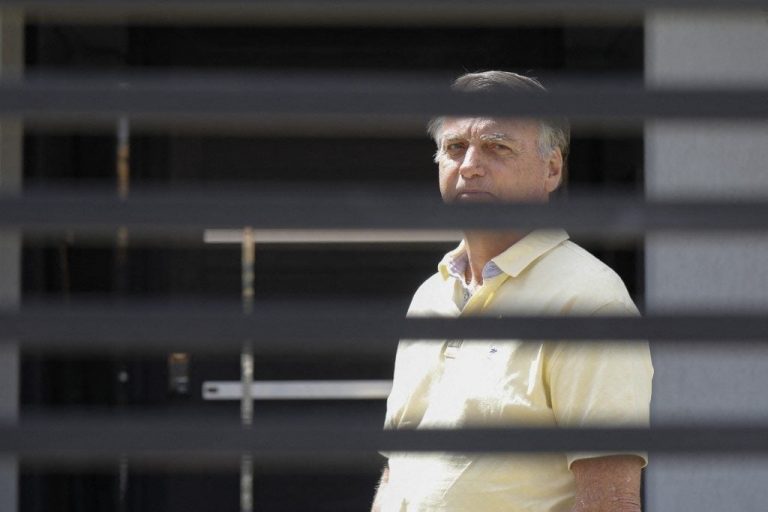
The preventive detention of former president Jair Bolsonaro, ordered by Brazil’s Supreme Federal Court (STF) on Saturday (22), has intensified expectations that his 27-year, three-month prison sentence could soon take effect. In September, Bolsonaro became the first former head of state in Brazil’s history to be convicted for leading an attempted coup d’état.
With the deadline for new appeals expiring this Monday (24), the case is now on the brink of becoming final — a stage known in Brazil’s legal system as trânsito em julgado, when no further appeals are possible. At that point, Justice Alexandre de Moraes, the case’s rapporteur, may issue an order for Bolsonaro’s imprisonment at any moment.
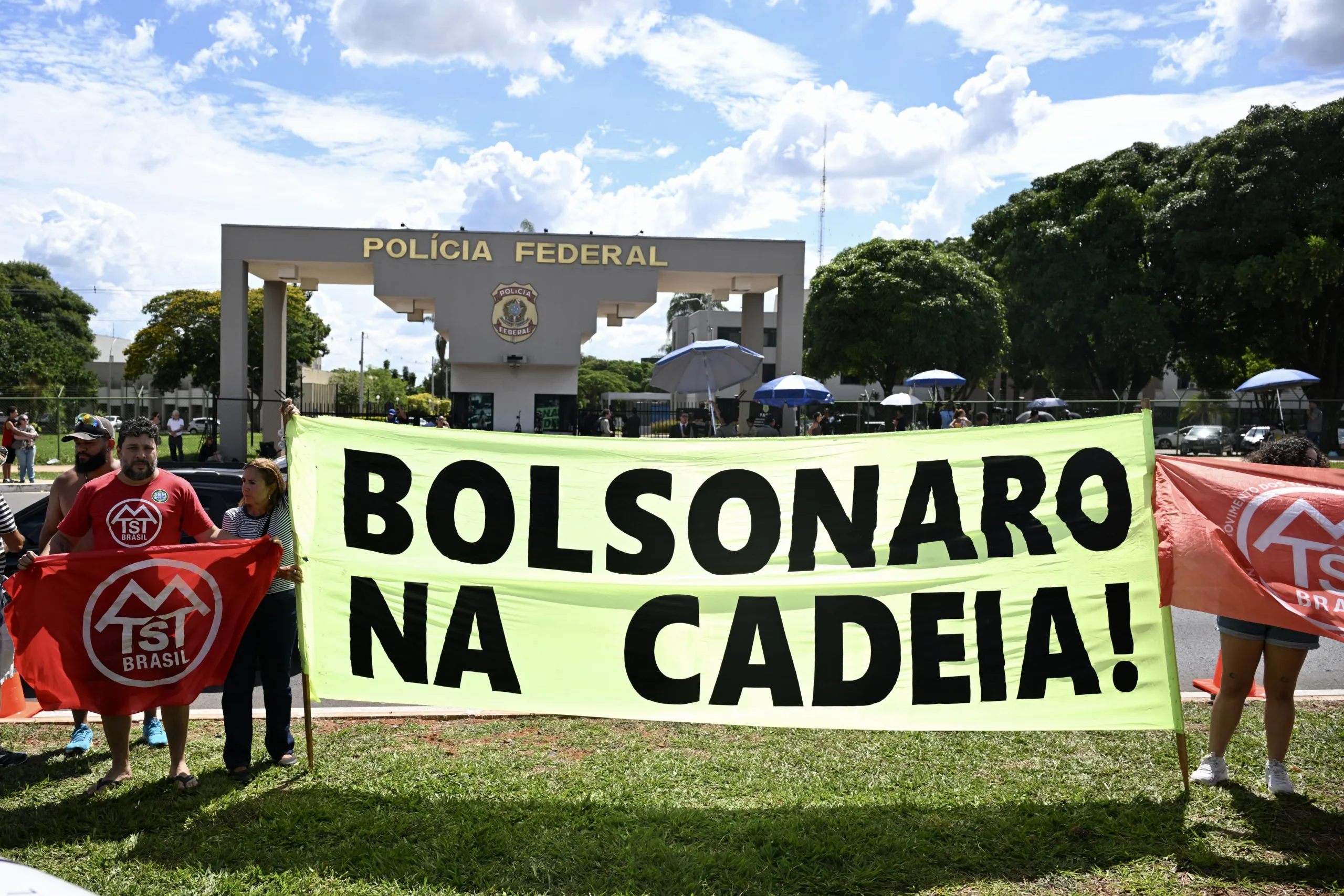
Although Bolsonaro’s transfer to a special holding cell at Federal Police headquarters in Brasília on Saturday did not yet mark the start of his sentence, the Court determined that house arrest was no longer sufficient to prevent the risk of escape, even with an electronic ankle monitor.
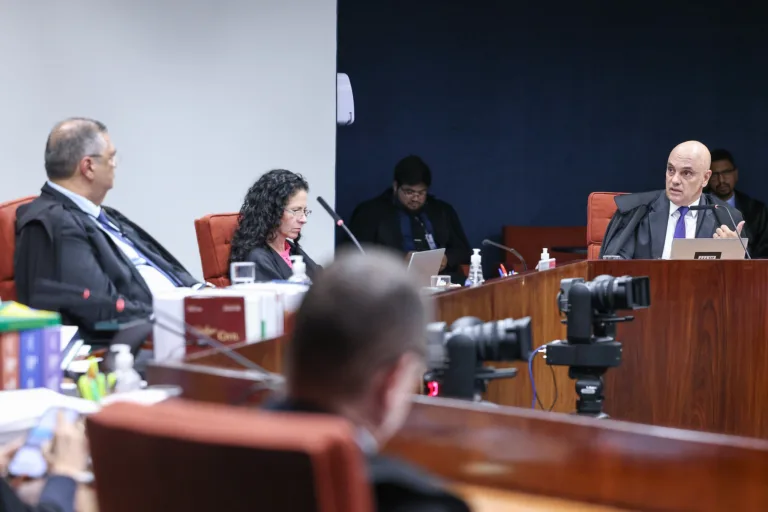
Earlier last week, the STF’s First Panel rejected all remaining appeals and upheld the convictions of Bolsonaro and other members of what prosecutors describe as the coup’s “Hard Core.” The final motions sought to reduce the sentences and avoid imprisonment under a closed regime but were unanimously denied.
Once the final ruling is formalized, Bolsonaro’s sentence will likely be served either at Brasília’s Papuda penitentiary or in a special cell at the Federal Police facility. The other convicted defendants, including military officers and federal police agents, are expected to serve their sentences in military detention units or designated wings within the Papuda complex.
What comes next
Following the publication of the Supreme Court’s written ruling last Tuesday (18), Bolsonaro’s defense team has five days to file new motions before the court. Justice Alexandre de Moraes, the case’s rapporteur, may either accept the appeals or classify them as protelatórios, that is, measures intended solely to delay the proceedings.
Moraes’s office is known for moving cases swiftly, a posture that could accelerate the start of Bolsonaro’s prison term. Another potential avenue for the defense would be a motion for reconsideration, but under Supreme Court precedent, this appeal is only admissible when at least two justices dissent from the majority opinion. Bolsonaro’s conviction was decided by four votes to one, with only Justice Luiz Fux voting for acquittal.
If Moraes issues a solo ruling, the defense may still file an internal appeal, which could bring the case before the full First Panel for confirmation.
Countdown to sentencing
In an interview with Radio BdF, legal scholar Leonardo Drigo said that the enforcement of Bolsonaro’s final sentence is expected “within the coming days.” He described the former president’s arrest as “the culmination of a due legal process” and “the effective exercise of democracy through the judiciary.”
Drigo explained that Bolsonaro’s preventive detention, authorized under Brazil’s Code of Criminal Procedure, was based on evidence that he had tampered with his electronic ankle monitor. During a custody hearing on Sunday (23), Bolsonaro claimed that the device had been damaged due to “paranoia” caused by medication.
Justice Moraes also cited as grounds for the preventive measure the risk of flight, pointing to a “vigil” organized by Senator Flávio Bolsonaro (PL-RJ) and the possibility that the former president might seek refuge in a foreign embassy near his residence.
According to Drigo, this precautionary detention weakens any future attempt by the defense to request house arrest. “He would need to prove an actual health impairment to justify such a request. Simply saying that his hiccups are uncontrollable will not suffice,” he noted.
Drigo added that the new order “could significantly complicate Bolsonaro’s position once the sentence is fully enforced.”
Rejecting far-right claims of political persecution, the jurist emphasized that the proceedings have remained within the bounds of the law: “These defendants, including Jair Bolsonaro, are being guaranteed the same human rights that they themselves denied to others while in power.”
Background
Bolsonaro was convicted of armed criminal conspiracy, attempted violent abolition of the democratic state, attempted coup d’état, property damage with violence and serious threat, and desecration of protected heritage sites.
The criminal investigation into the attempted coup began after the January 8, 2022 storming of the Praça dos Três Poderes, when Bolsonaro supporters invaded Brazil’s Congress, Supreme Court, and presidential palace following his electoral defeat.
The case gained momentum after a plea deal with Lieutenant Colonel Mauro Cid, Bolsonaro’s former aide-de-camp, who provided testimony describing conversations and meetings between the former president, ministers, and military officials as they planned a coup.
Federal Police investigators later uncovered the existence of a “draft decree” for a coup and a plot known as “green-and-yellow dagger”, which allegedly included plans to assassinate President-elect Luiz Inácio Lula da Silva, Vice President Geraldo Alckmin, and Supreme Court Justice Alexandre de Moraes.