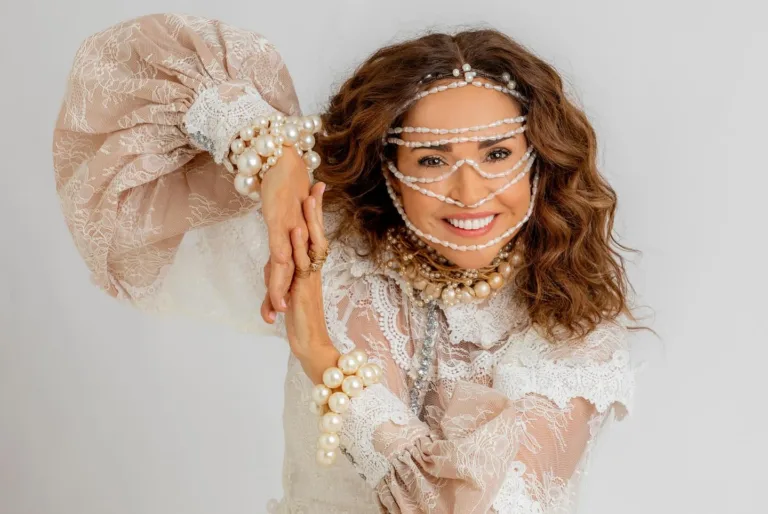
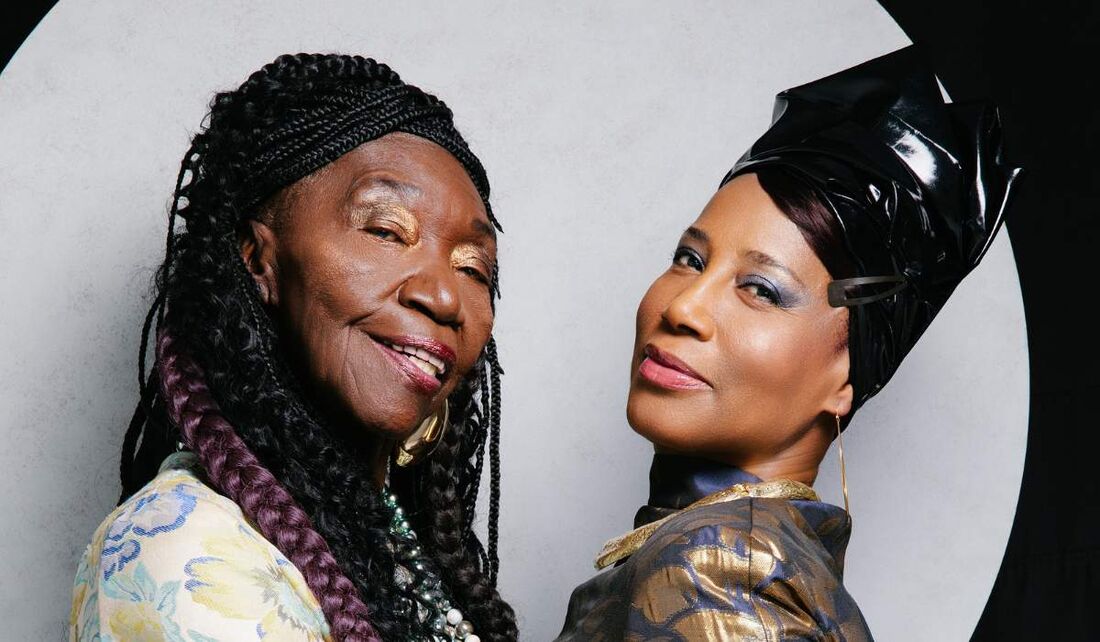
To close out 2025 on a high note and begin 2026 celebrating Brazilian culture, Lia de Itamaracá, 81, from the state of Pernambuco, and Daúde, 64, from Bahia, have joined forces for the first time. The pair released their collaborative album Pelos Olhos do Mar (Through the Eyes of the Sea) this month.
The record includes reinterpretations and new original tracks written by key figures in Brazilian culture, including Emicida, Céu, Russo Passapusso and Karina Buhr.
“It’s a work meant to take to the whole world. We’re making a patchwork quilt together. There are so many composers, so many lyricists I didn’t even know. I want to see how far I can go. No one doubts that it will go far. We’re only halfway through. We’re in God’s book, when He says ‘stop,’ we stop,” celebrated Lia de Itamaracá in an interview with Radio BdF.
“It’s funny because this exchange feels very organic. When I first received the songs, my first reaction was pure emotion,” says Daúde, reflecting on the collaboration with writers from different generations. “I believe these people understand, regardless of gender or generation, what each artist contributes organically to Brazilian music.”
Read the full interview below:
BdF – How did this partnership begin?
Daúde – I am very happy. The result fills me with hope and rhythm. This encounter was already destined, at least from my side, and from Lia’s team as well. We began by appearing in each other’s concerts, and there was already this ethereal, universal connection. That connection eventually took shape in the desire to turn these encounters into a proper project, something with longevity that represented us together. It comes from a movement of admiration, respect, and a deep will to join forces in the sea of music.
Lia de Itamaracá – I am thrilled about this album. It’s wonderful, thank God. It’s work we want to bring to the whole world, together with Daúde. We are making a patchwork quilt together. I received a wonderful invitation: to work, to change, to explore new music. I’m on my island bringing Daúde with me. For me, it’s incredible to work with so many composers, só many lyrics I didn’t know. I studied, recorded, and I’m still studying them, because we want to take these songs to the stage. I’m loving it.
This project includes artists from younger generations. Did that excite you both as well?
Lia de Itamaracá – Exactly. That’s sensational. I want to go even further, with shows, with this beautiful work, together with Daúde. The two of us together are one big piece. These other composers gave us their songs too. It’s beautiful. Pelos Olhos do Mar, and I’m close to the sea myself.
Daúde, how was it to receive compositions from Russo Passapusso, Emicida, Chico César, etc., with such different rhythms and backgrounds?
Daúde – It’s such an organic exchange. I think they respect us because they see how much love and care we put into music. That motivates them to gift us these songs.
Lia, you are known as the Queen of Ciranda, for nationalizing the genre and revolutionizing it. This new album includes Ciranda but also other styles. How is it to sing outside your rhythm?
Lia de Itamaracá – When a new song comes, yes, I get nervous. I pray and study and study. Daúde had to come to Itamaracá so we could rehearse together, shaping the arrangements, hammering away until it worked. Then we recorded it. Beautiful. It was good.
Daúde, how is it for you to work with Ciranda?
Daúde – I always say, and Lia laughs, that I feel adopted by her and her team. She is a source of strength and history. When I look at Lia, I see resistance, not as a trendy word, but in the real sense. She is 81, and that visibility and success today were earned through a long path. Sometimes I forget she’s my colleague onstage because her presence demands reverence.
Lia, a Congressional committee recently recognized your work as part of Brazil’s national cultural heritage. How do you feel about this recognition of Ciranda and of your legacy?
Lia de Itamaracá – It’s wonderful. Ciranda is already in the world. My work, my effort, all being honored. I follow my path. My dream was to sing, and I’m singing. I wanted to be an actress, and I am. I am happy.
Daúde, Brazil recently passed the so-called “Devastation Bill,” which weakens environmental licensing. The album’s title references the sea, do the inspirations here connect with current debates like COP30 and the climate crisis?
Daúde – I’ll speak from what I witnessed in Itamaracá. The island has stunning beaches and tourism potential, but there is neglect. People like Lia work to preserve culture and the environment, yet they are not properly supported. The issue isn’t only national; it’s local. Many communities have people fighting to protect nature and cultural life, and they are often ignored.
Lia, did you ever think of leaving Itamaracá?
Lia de Itamaracá – Never. It’s where I was born and raised. It’s my inspiration, my beach, my leisure. If I die outside Itamaracá, I want to be brought back to Itamaracá.
How was your friendship with singer Reginaldo Rossi?
Lia de Itamaracá – He had a home here and always called me over to chat. One day he told me: “Leave this island, there’s nothing here for you.” And I replied: “My dear, God has more to give me than this island. I’m not leaving.” The problem is not the people, it’s the authorities who don’t value this marvelous island.
Daúde, Brazilian brega music was recently recognized with its own National Day. Is there a link between brega and ciranda?
Daúde – Everyone can drink from everything. What bothers me is when the industry takes over and flattens culture into products. Genres evolve and influence one another. Reginaldo Rossi himself, what was once dismissed as “brega” is now cool. Music has no borders.
Can we expect this partnership to continue?
Daúde – So many doors are opening: a Rouanet [a Culture Incentive Law] funded tour in the Northeast, potential for a musical about Lia, travel to Europe. One step at a time, but the fruits are coming, and the love from the audience is beautiful. We feel like one single ensemble on stage.
Lia de Itamaracá – I want to see how far I can go. No one doubts that we’re going far. We’re only halfway there. We’re in God’s book, when He says “stop,” we stop.