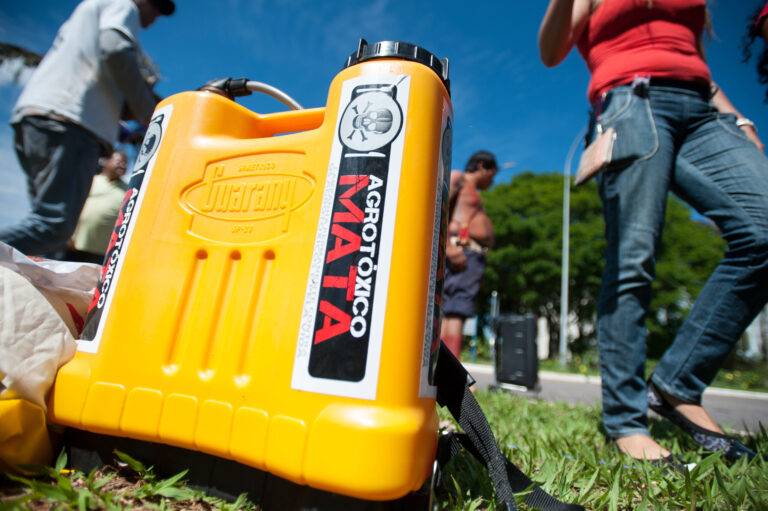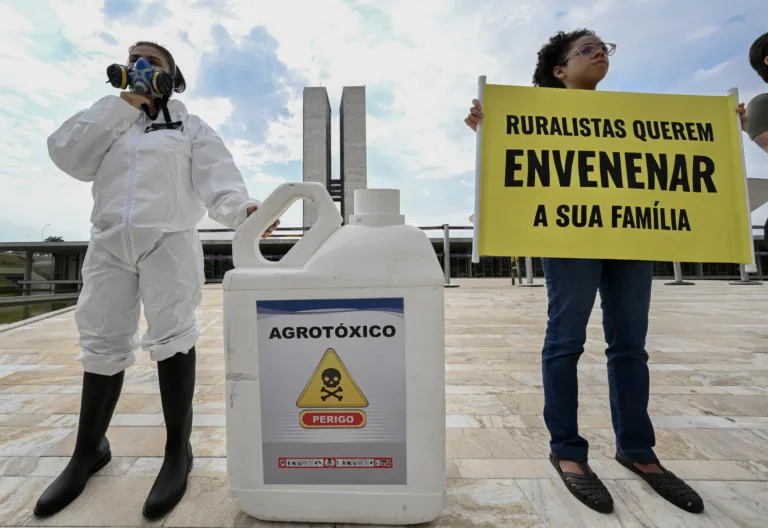
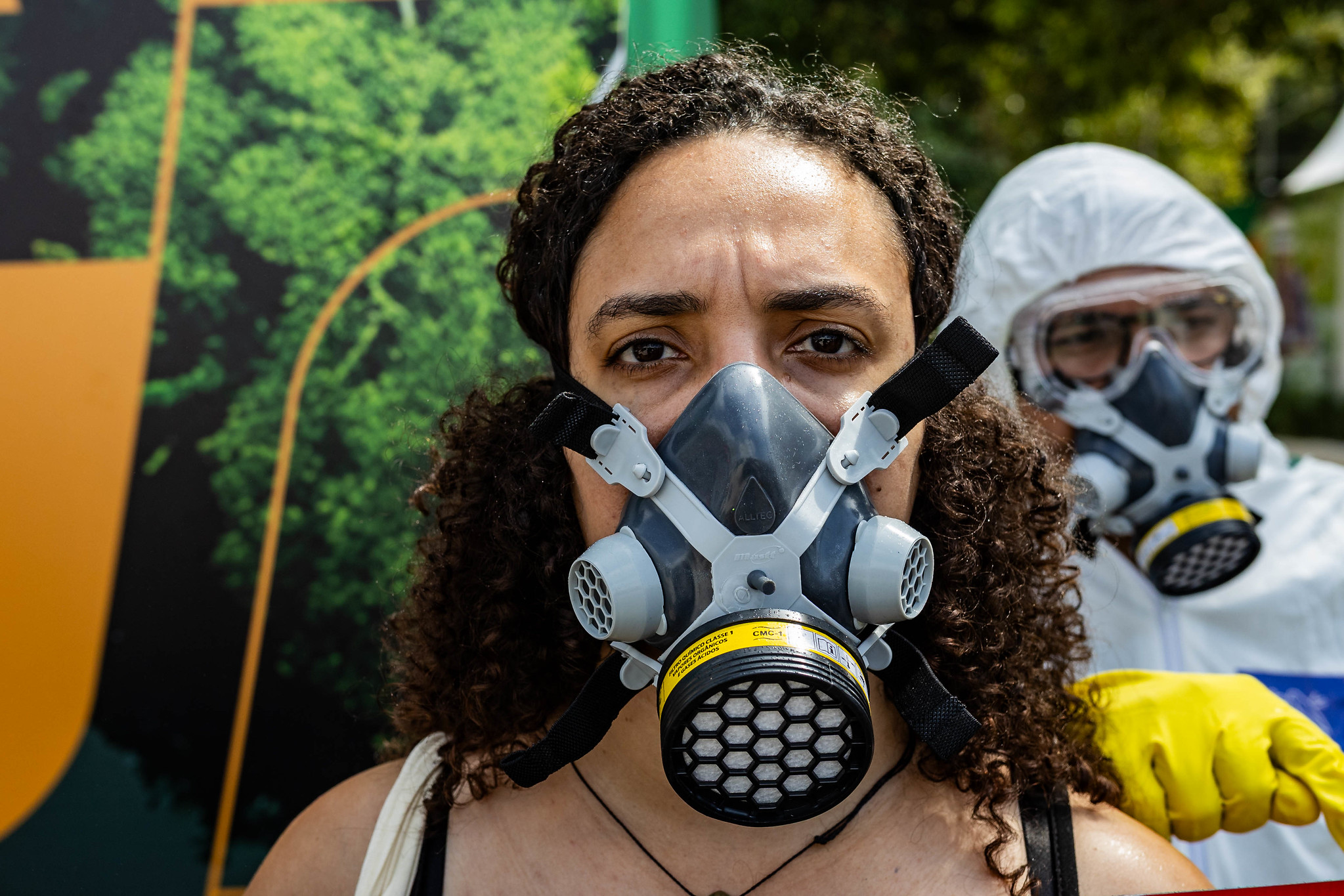
It may sound like a recycled headline, but it isn’t. In 2025, Brazil once again set a new record for the approval of pesticides for agricultural use. Exclusive reporting by BdF shows that 725 new products were authorized between February and early December of this year, an increase of nearly 10% compared to 2024, when the country had already set a record at the time with 663 new products entering the Brazilian market.
Jaqueline Andrade, legal adviser at the organization Terra de Direitos, notes that Brazil’s pesticide industry moves billions of reais with direct support from the State, while the population endures the severe consequences of this policy.
“This means we have more contaminated water, more contaminated food, and more people who are directly poisoned, whether acutely or chronically, by pesticides,” Andrade explains.
“Our country is a true chemical dump; our country is poisoned. And every institution is moving to serve agribusiness, whether through subsidies, laws, or the permissiveness the government grants to ensure the billion-real profits of companies in the pesticide sector, at the expense of Brazilian society as a whole and the impacts this causes,” she says. Andrade attributes the high number of approvals to Law 14,785/2023, known as the “Poison Package,” which loosened regulations and weakened the role of both the National Health Surveillance Agency (Anvisa) and the Brazilian Institute of the Environment (Ibama) in the pesticide registration process.
Given the expanded power granted to the Ministry of Agriculture, Livestock and Supply (Mapa) under the new law, Jakeline Pivato, a member of the Permanent Campaign Against Pesticides and for Life, argues that the ministry has become a “notary office for poisons.”
“The continuous rise in pesticide registrations in Brazil shows that Mapa has turned into a real registry office for poisons. All it takes is a stamp, and it’s approved. It’s unthinkable that these pesticides are actually undergoing the studies necessary to ensure their safety. If we were talking about new substances that were less toxic and more efficient, that would be admirable. But what we see are new registrations of old molecule, including glyphosate and atrazine, which the World Health Organization has already classified as carcinogenic,” Pivato says.
But wasn’t the goal to reduce pesticide use?
The new record comes in the same year President Luiz Inácio Lula da Silva signed the National Program for Pesticide Reduction (Pronara), which sets guidelines for public policies aimed at decreasing the use of toxic chemical substances in Brazilian agriculture. The contradiction has raised concern among civil society organizations.
“What we question is: what is the Brazilian government’s actual commitment to reducing pesticide use, something that should be institutionalized through Pronara, yet the program is already under threat from Congress,” Andrade says. She refers to the November approval, in the Chamber of Deputies’ Agriculture Committee, of Legislative Decree 443/2025, introduced by federal deputy Rodolfo Nogueira, which seeks to overturn the presidential decree that created Pronara.
Pivato notes that the program was built with participation from social movements and organizations that advocated for its adoption and insists on its implementation. “It is urgent that Pronara actually begins to operate, and that it puts a brake on this agribusiness free-for-all,” she argues.
Brazil: the world’s toxic dumping ground
Among the ten most-used pesticides in Brazil, seven are banned in other countries because of proven links to serious health conditions, including neurological disorders, fetal malformation, miscarriages, and several types of cancer.
One of the most widely used is atrazine, a herbicide heavily applied in sugarcane, soybean, and corn crops. It is now the target of a public civil action filed by the Federal Prosecutor’s Office in Mato Grosso do Sul (MPF-MS), which seeks to ban its use and demands immediate reevaluation by regulatory authorities.
The lawsuit is based on studies confirming atrazine contamination in two major rivers in the state, the Dourados and the Paraguay. The substance was detected in surface waters, rainwater, and even in tap water in riverside and Indigenous communities.
Speaking to BdF about the new approval data, federal prosecutor Marco Antonio Delfino, author of the atrazine lawsuit, warned that many of the products approved are generic pesticides, which receive minimal oversight.
“The production of generics is not accompanied by increased inspection, neither of the products themselves nor of the inputs used,” Delfino explains. He then references the infamous Agent Orange, the chemical used by the U.S. military during the Vietnam War (1964-1975) and later applied as an agricultural herbicide.
“It is important to remember that the main harm caused by Agent Orange did not come from the combination of two pesticides, but from the toxic residues generated during manufacturing. So, a massive wave of generic approvals without consistent state oversight is very likely a sign that many of these products will contain high levels of toxic residues, causing severe harm to both health and the environment,” the prosecutor says.
BdF contacted the Ministry of Agriculture, requesting a comparison between these findings and official data, as well as a statement regarding the record number of pesticide approvals in 2025. The ministry confirmed receipt of the inquiry and said it had forwarded it internally, promising a response “as soon as possible.” No reply had been received by the time of publication. Information will be added once it becomes available.