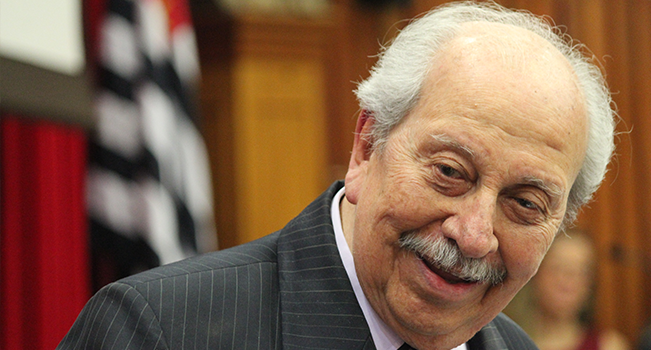
The punishment of coup-plotting military officers in 2025 is a retrospective lesson that could have been applied more forcefully in the past. The assessment comes from Almino Affonso, former Minister of Labor under President João Goulart, who witnessed firsthand the behind-the-scenes coup conspiracy that overthrew the government and ushered in a 21-year U.S.-backed dictatorship in 1964.
“Therefore, I commend the fact that it has now been possible, in a more forceful manner and through strictly institutional measures, to silence those who attempted to carry out a cruel coup against democracy,” he said.
“At the time, when we analyze the situation we were living in, it was a period of intense social and political effervescence,” Affonso explained in an interview with Radio BdF. “Because of this, there still exists today a space for critical, and sometimes harsh, analysis of João Goulart’s government,” he added.
Affonso highlighted that during Jango’s brief administration, economic and popular areas that had previously been ignored were brought to the forefront, such as rural issues, agrarian reform, and respect for the rights of rural trade unionism. “Not only that, but several areas of economic and social importance were in full motion. There was no logic to justify their interruption, yet it happened,” he said.
“It was dramatic for all of us,” he emphasized, adding: “A significant part of public life was cut short for years across South America, in Chile, Uruguay, Argentina, Peru, Mexico. It was an extremely negative period, and it took a long time before countries could reemerge and experience democratic opening.”
Recalling the period of Brazil’s military dictatorship, Affonso cited General Amaury Kruel. On the night of March 31, 1964, the general, then commander of the Second Army, attempted to bargain over the mobilization of his troops to resist the advancing coup. Kruel presented Jango with conditions: breaking ties with the “communists,” dismissing so-called “radical” ministers, and outlawing the inter-union organization General Workers’ Command.
“He was not only Jango’s close friend, but also his son’s godfather. It is truly hard to understand,” Affonso said.
The former minister explained that the question of why the military response was insufficient to stop the 1964 coup is “the most difficult one.” He sees a paradox in analyses that hastily attribute the depth of the coup solely to U.S. pressure. “Direct or indirect U.S. intervention played a decisive role at that moment,” he acknowledged.
At the same time, he noted that the United States was openly intervening in coups across Latin America during that period: in Bolivia (1964), which brought René Barrientos to power; in Chile (1973), led by Augusto Pinochet; and in Argentina (1976), under Jorge Rafael Videla.
In The João Goulart Government: Social Struggles in Brazil, 1961–1964, historian Moniz Bandeira states that the Kennedy administration and the CIA directly financed far-right armed militias, as well as political figures such as Carlos Lacerda in Guanabara and Magalhães Pinto in Minas Gerais, to conspire against Goulart’s administration.
“With the added irony that [Kennedy] had delivered an inaugural speech full of lofty claims, saying ‘we will be friends of those who want democracy’, but the reality was the opposite,” Affonso pointed out.
Jango’s legacy in 2025
The last surviving minister of João Goulart’s government, Almino Affonso emphasized that resistance to the coup itself is a legacy that has endured since that period. “Perhaps with this democratic resurgence, which seems almost blessed to me, many will gain a clearer understanding,” he reflected.
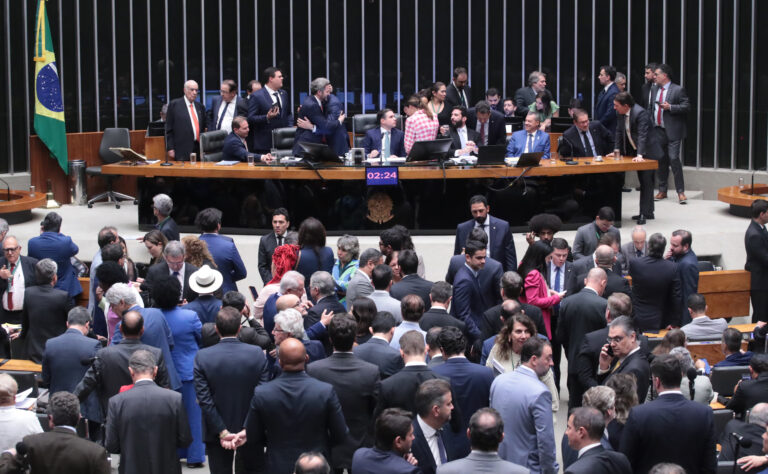
He also issued a warning about Brazil’s Congress, which he described as troubling due to the lack of even a “minimum level of natural convergence.” “There is no leadership willing to stand up and say, ‘I stand for this.’ That leads Lula, for example, to meet with the Speaker of the Chamber to ease tensions, when the normal expectation would be of a parliament capable of growing stronger and fulfilling its role,” he concluded.