
The Centre for Science and Technology Studies (CWTS) at Leiden University in the Netherlands released its latest global university ranking in recent days, placing two Chinese universities in the top two positions, ahead of Harvard University, which ranked third.
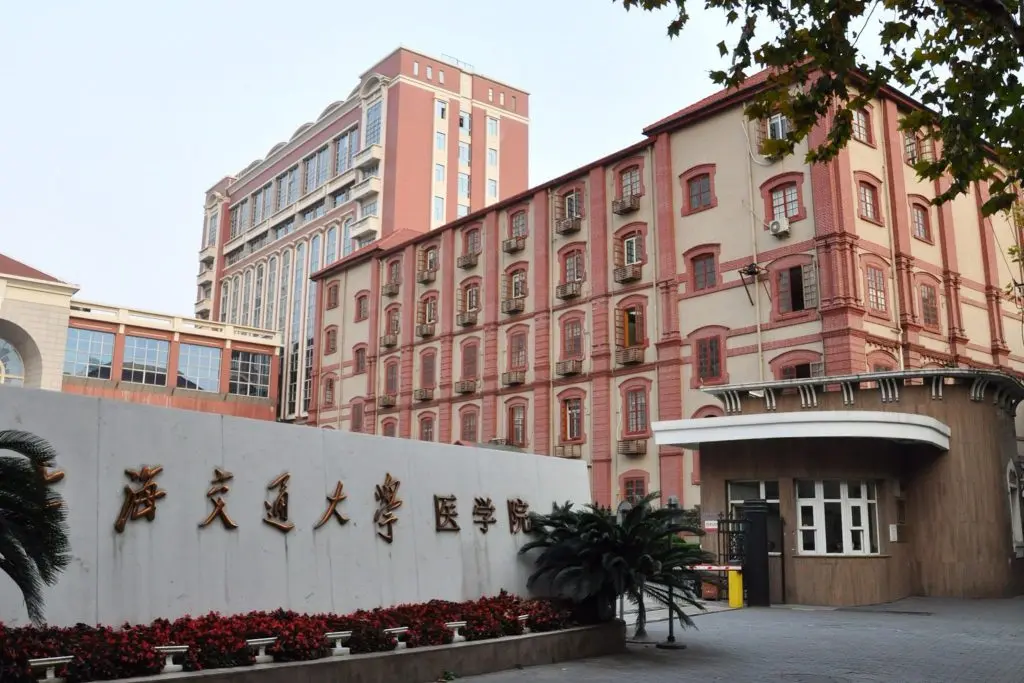
In the latest edition of the CWTS Leiden Ranking, first place went to Zhejiang University, located in southeastern China. Second place was taken by Shanghai Jiao Tong University, based in Shanghai.
Beyond the top two, Chinese universities occupy five additional positions in the top ten. Ranked from fourth to eighth are Peking University, Fudan University, Tsinghua University, University of Science and Technology of China, and Nanjing University.
The final two spots in the top ten are held by U.S. institutions: the Massachusetts Institute of Technology (MIT) and the University of California, Berkeley.
Brazil also stands out in the ranking, with the University of São Paulo (USP) placing 17th, making it one of the few non-Chinese institutions to appear among the top 20.
It is worth noting that the Leiden Ranking is based exclusively on scientific output, articles and reviews indexed in the Web of Science, and does not include criteria such as academic reputation, employer prestige, formal internationalization, proportion of foreign students, individual awards, or perceptions of teaching quality. For this reason, the model is considered largely immune to symbolic or market-driven variables.
Reasons behind China’s dominance
According to jurist and political scientist Hugo Albuquerque, the current hegemony of Chinese universities is the result of “massive investment made since the 1949 Revolution to train people capable of building the country, and that investment never stopped.”
“This enormous state investment focused primarily on the exact sciences and technology, where we can see very significant progress. There was also investment in the humanities, though not to the same extent. Clearly, this was part of a broader project to build a nation and a global superpower,” Albuquerque said.
The United States
Albuquerque also commented on what the Leiden Ranking reveals about the United States. In his view, the list reflects “a crisis in U.S. universities,” which have lost global leadership.
Among the causes, he points to “very high costs and the disconnection of universities from a national development project, which, in fact, no longer exists.”
“Today, the United States is divided over what its national project actually is. The Republican Party, currently in power, denies the importance of science, technology, and knowledge in general. I believe this directly harms the development of U.S. higher education,” he added.
Albuquerque also recalled attacks made by Donald Trump against universities in speeches during the first year of his current presidential term.
“Even though universities enjoy a degree of autonomy, this stance creates a stalemate, because there is no real debate between two national projects representing different civilizational models. What exists in the United States is a struggle between a project dominated by neoliberal ideas and another driven by fascist ideas—one that denies the central role of education and science, precisely the areas where China has invested heavily,” the jurist concluded.