Brazil’s Vegetable Oil Industry Association (Abiove) announced on Monday (5) that it is withdrawing from the Soy Moratorium, a landmark agreement aimed at protecting the Amazon rainforest and reinforcing Brazil’s Forest Code. With the decision, major agribusiness corporations such as Bunge, Cargill, and Amaggi are relinquishing their commitment not to purchase soy grown on land deforested in the Amazon after 2008.
The move follows the enactment of Mato Grosso state law 12,709/2024, which came into force on January 1, 2026. Mato Grosso is Brazil’s largest soy-producing state.
The law restricts tax incentives for companies that adhere to the moratorium, a measure experts say poses a serious threat to rainforest conservation and to Brazil’s goal of achieving zero deforestation.
In a statement, the Institute for Forest Management and Certification (Imaflora), which has worked for three decades to promote sustainable land-use practices, warned that the moratorium itself is now at risk.
“If the Soy Moratorium is dismantled, the likely outcome is increased deforestation and, consequently, higher greenhouse gas emissions,” the institute said. “This decision undermines Brazil’s climate targets under the Paris Agreement, which commit the country to reducing emissions by 59% to 67% by 2035.”
Despite the environmental risks, Mato Grosso Governor Mauro Mendes described Abiove’s decision as a “victory” for the state, which accounts for roughly 29% of Brazil’s soy production, according to July 2025 data from the National Supply Company (Conab).
“From now on, these companies, like any Brazilian, will be required to comply with national environmental legislation,” Mendes said in a statement released by the state’s communications office. “The Brazilian Forest Code will be the benchmark for meeting environmental requirements.”
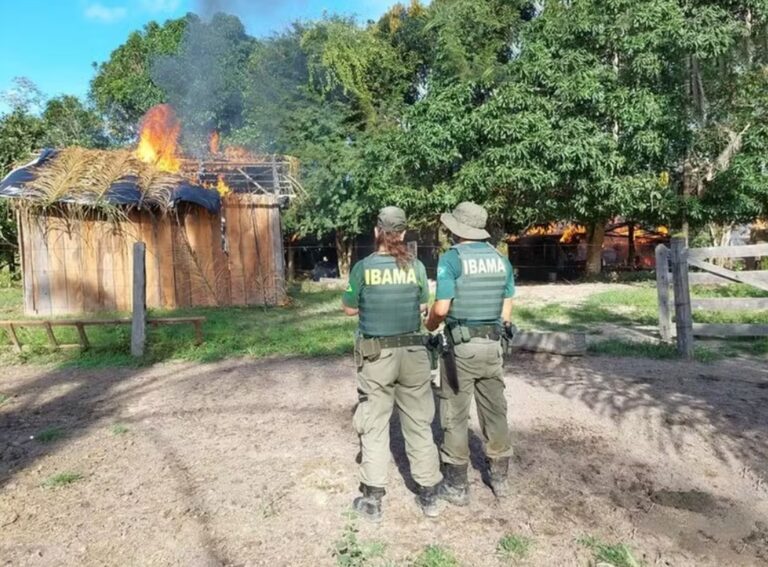
In practice, however, the Forest Code, which allows up to 20% of rural properties in the Amazon to be legally deforested, has proven insufficient to protect the rainforest. A study by the Instituto Centro de Vida (ICV) found that 91% of deforestation recorded in the Amazon between August 2023 and July 2024 was illegal.
“The Forest Code is an extremely important legal instrument for Brazil’s environmental governance and must be strengthened,” said Lisandro Inakake, Imaflora’s public policy manager. “But its full implementation requires significant effort, as only a small portion of the Rural Environmental Registry (CAR) entries have been reviewed and validated.” The CAR is a self-declared registry used to monitor rural landholdings.
For Rômulo Batista, coordinator of Greenpeace Brazil’s Forest Solutions program, the Forest Code alone is “insufficient” to protect the Amazon. “Just look at the share of illegal deforestation across different economic activities,” he said.
In this context, the Soy Moratorium has functioned as a critical pressure mechanism, discouraging producers from expanding soy cultivation into newly deforested areas and instead confining production to land cleared in the past.
Deforestation is Brazil’s largest source of carbon dioxide emissions. In a world increasingly marked by extreme weather events, weakening a key forest-protection mechanism is not only a setback, it is a global risk.
“Climate change is already here,” Batista warned. “The most important contribution Brazil can make to slowing the frequency and intensity of extreme climate events, at home and worldwide, is achieving zero deforestation.”
Mounting pressure against the moratorium
Since 2024, the Soy Moratorium has faced growing challenges. That year, Mato Grosso approved state law 12,709, which took effect in 2026.
In 2025, Brazil’s antitrust authority, the Administrative Council for Economic Defense (Cade), temporarily suspended the agreement, exposing participating companies and associations to potential fines.
The investigation was triggered by a complaint filed by the Chamber of Deputies’ Agriculture Committee, which is dominated by lawmakers aligned with agribusiness interests. One of them, far-right congressman Rodolfo Nogueira (PL-MS), who chairs the committee, is himself a soy producer.
In place since 2006, the Soy Moratorium is a voluntary pact among companies committing not to purchase soy grown on land deforested in the Amazon after July 22, 2008. In practice, it has served as a crucial barrier against the expansion of deforestation, complementing the Forest Code.
Although law 12,709 remains in force, it does not revoke or invalidate the Soy Moratorium. The agreement has been upheld by Brazil’s Supreme Federal Court (STF) as a lawful initiative that has delivered environmental and economic benefits. The state law is currently being challenged through a constitutional lawsuit, and its merits have yet to be ruled on by the court.