18, 30, 70, 99, 132… the number of suspected cholera cases rises week after week in the Ouest department of Haiti, where the capital, Port-au-Prince, is located. The curve’s upward climb worries health workers. The rate is still considered low, at 8%, but underreporting is expected. Above all, in the midst of multiple simultaneous crises, the country is in terrible condition to control a new outbreak.
“Areas with high urban density and scarce sanitary infrastructure are especially vulnerable,” warns a report from the Ministry of Public Health and Population (MSPP), which fears “considerable pressure on already weakened health structures.”
But the warning is an understatement. The deterioration of security in Port-au-Prince has forced multiple medical units to shut their doors in recent years, so much so that, while private clinics still exist, far beyond the population’s budget, only one public hospital remains operational in the capital region: Lapè Hospital, in Delmas.
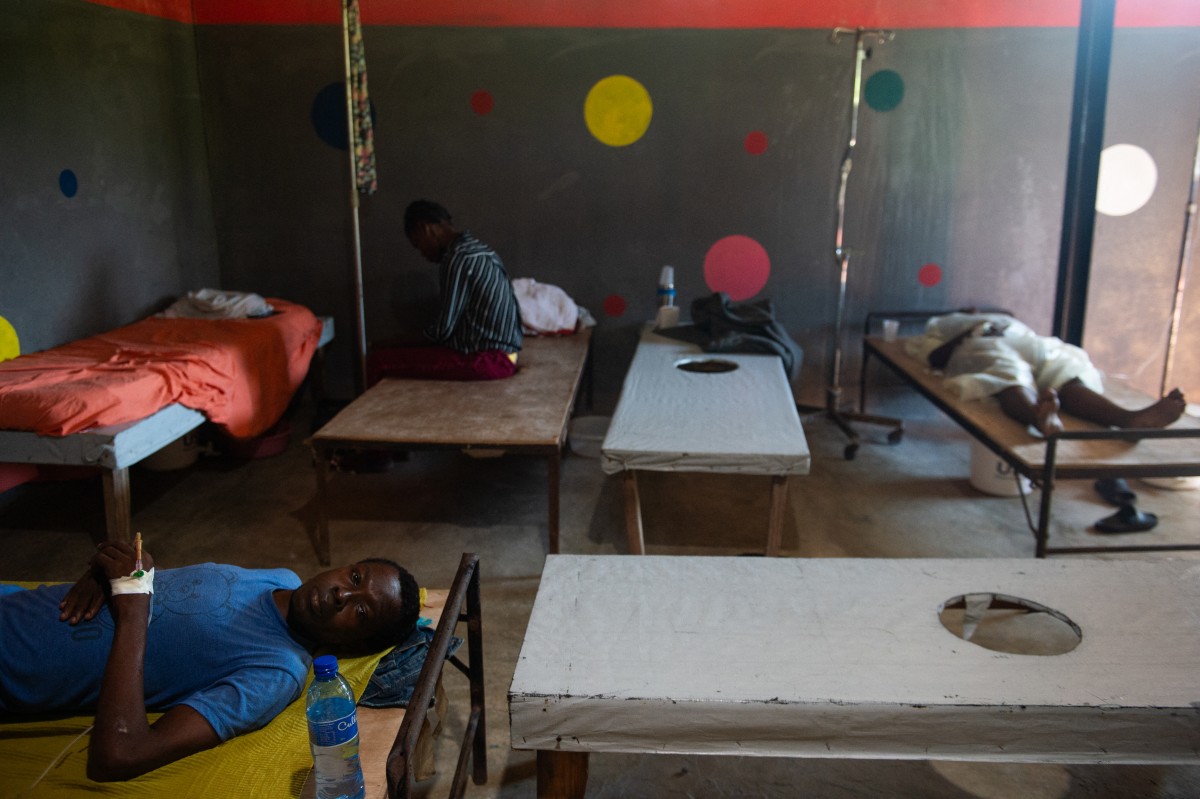
The hospital has opened a clinic on-site to prioritize suspected cholera patients, but under pressure and harsh working conditions, staff exhaustion is already severe, across every department.
“[The hospital] is always full and overflowing,” laments Sergeline Nazulus, a nurse at Lapè. “Because it receives every case, not just cholera, but any accident, illness, pain… every day the demand on nurses and doctors increases,” she told BdF.
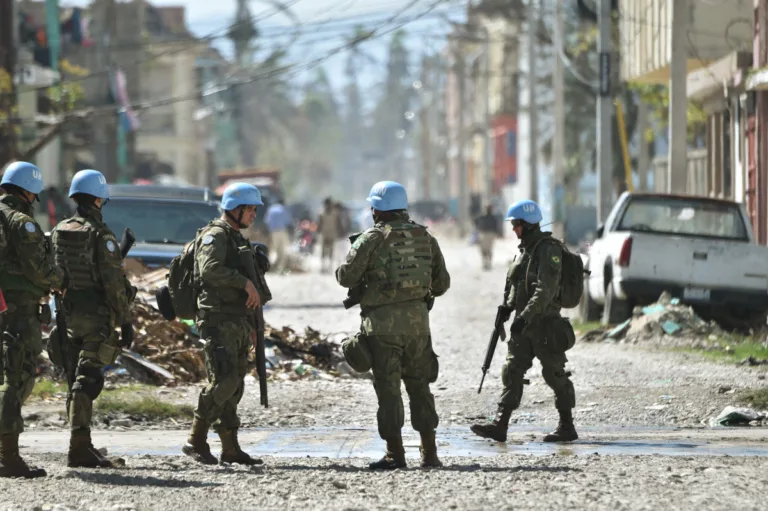
Besides overcrowding, few can even make it to the hospital. Movement is stifled by the extreme difficulty of circulating through most of the country, especially the capital, where large areas are dominated by gangs.
The spread of cholera has another aggravating factor: in most patients, the disease manifests as mild nausea or diarrhea, or remains asymptomatic. The risk in critical cases is acute dehydration, which can be fatal if not treated urgently.
“The first thing is to administer oral rehydration solution. But if a person doesn’t know that, or stays home sick without going to a hospital, they can dehydrate and that can cause death,” explains Nazulus.
Nests of contamination
The second concern is transmission. Cholera is a bacterium typically spread through contaminated food or water. It is inseparable from hygiene, sanitation, and access to clean water. Which is why it finds in the Port-au-Prince of 2025 an extremely fertile ground.
Nazulus sees a direct, undeniable connection between the disease’s multiplication, population density, and government neglect. “More cases were registered where people live with greater promiscuity,” she says, after analyzing the data.
“If you look at Pétion-Ville [the third municipality with the highest number of cases], you see trash piled across the streets, dirty water running through traffic and pedestrians… the city government doesn’t take responsibility. That context contributes to the multiplication of the disease.”
Conditions do not help
Bel-Air is a poor community, one of the largest and most vulnerable in Port-au-Prince, and surrounded by armed groups. Resident Resain Domini sees the same picture. Beyond lack of garbage collection and sanitation, services left to residents themselves, the scarcity of water is the most damaging.
Domini says the neighborhood once had running water, a luxury not shared by all districts, but gangs cut the service and smashed the pipes. “The situation is difficult… we’ve simply been left with no water. Not to drink, not to wash, not even to flush toilets. The only way is to buy gallons, but they are expensive, and sometimes the delivery vehicles can’t even pass.”
Another propagation hotspot are the refugee camps sheltering hundreds or thousands of families displaced by gang violence. A report by Ayibopost in April, during the year’s first outbreak, denounced the precarity of these spaces, lacking any infrastructure to guarantee dignified survival.
“People sleep on the floor with newborns, in promiscuous conditions, sometimes in rooms that serve as bathrooms, crowded with sacks of clothes and other objects. You can also see cooking utensils and even food in the sinks of the sanitary blocks,” wrote Jean Feguens and Jerôme Wendy Norestyl. With the State absent, NGOs attempt to supply potable water and preventive health services, irregular, insufficient, fragile.
Responsibility
Cholera was brought to Haiti by the United Nations Mission for the Stabilization of Haiti (Minustah), led by Brazil, fifteen years ago. In 2010, the country was devastated by a massive earthquake that killed hundreds of thousands, and then cholera arrived, carried in by UN soldiers from Nepal.
The first cases were identified in October 2010, in the commune of Mirebalais, along the Artibonite River, where many communities collected water for drinking and domestic use, and where a contingent of newly arrived Nepalese soldiers was based. A later investigation showed they introduced the bacteria, and widespread contamination came from dumping camp sewage directly into the river.
“The epidemic began to spread in the region, and we didn’t understand what was happening. People didn’t know the contamination came from the river. They drank that water because they had no other,” recalls Domini. The disease brought by UN troops infected at least 800,000 Haitians between 2010 and 2016, killing nearly 10,000 across the country.
But despite evidence and years of legal work, there was never true accountability from the international community, nor compensation for victims’ families. The UN limited itself to acknowledging the facts, while the Haitian state played its habitual role of passive spectator.
For Haitians, trauma was the inheritance. And learning, too. Domini, now a member of a grassroots group, the Movement for the Freedom and Equality of Haitians through Fraternity (Moleghaf), remembers the mobilizations and prevention campaigns launched at the time.
“Organizations did the awareness work: washing hands, maintaining hygiene, boiling water before drinking.” Drawing a parallel to today, he promises no surrender, but hides no pessimism:
“We always have a plan B, because we’re used to a State that does nothing,” he says, ironically. “But today it’s harder, because we have no hospitals and no water… It’s another kind of war waged against the population, and it could still kill many people.”