The bloc of Global South countries known as the Brics is the most capable tool for offering a globally fairer alternative to the current system, one built to preserve inequalities and maintain the power of wealthy nations over developing ones.
That is the view of Maurício Metri, a specialist at the Institute of International Relations and Defense at the Federal University of Rio de Janeiro (UFRJ), who spoke during the opening day of the People’s Brics Summit this Monday (1) in Rio de Janeiro, Brazil.
“The Brics is the best chance to challenge the current system, which is based on extortion and punishment,” Metri said, referring to the structures established in the second half of the 20th century that remain in place today.
Metri explained that the global order was created and defended by the United States, based on two approaches toward other countries: extortion and punishment.
“Especially after the expansion of U.S. influence in Eastern Europe in the 1990s, this structure became one of extortion, forcing countries to pay the costs of wars, and punishment, in the form of sanctions, to discipline those who refuse to submit.”
“It is an ethical imperative for the bloc to build this fairer alternative,” he concluded, pointing to initiatives such as the creation of the Brics Bank as a successful example that demonstrates the bloc’s intention to develop options outside the traditional financial system controlled by the West, including the International Monetary Fund and the World Bank.
Sign of weakness
Along the same lines, Cuban representative Katia Chaple said the Brics offers “an opportunity to share knowledge among nations. We also defend a system of cooperation that does not fuel inequalities, unlike the current one.”
Chaple, who is part of the International Relations Department of the Central Committee of the Communist Party of Cuba, pointed to the U.S. sanctions – in place since 1962 – as an example of the perversity of the current system, noting that they affect virtually every aspect of the country’s economy.
“They prevent everything, from Cuban residents in the U.S. sending remittances to relatives on the island to Havana expanding cooperation with other countries by sending trained doctors where they are needed,” she said.
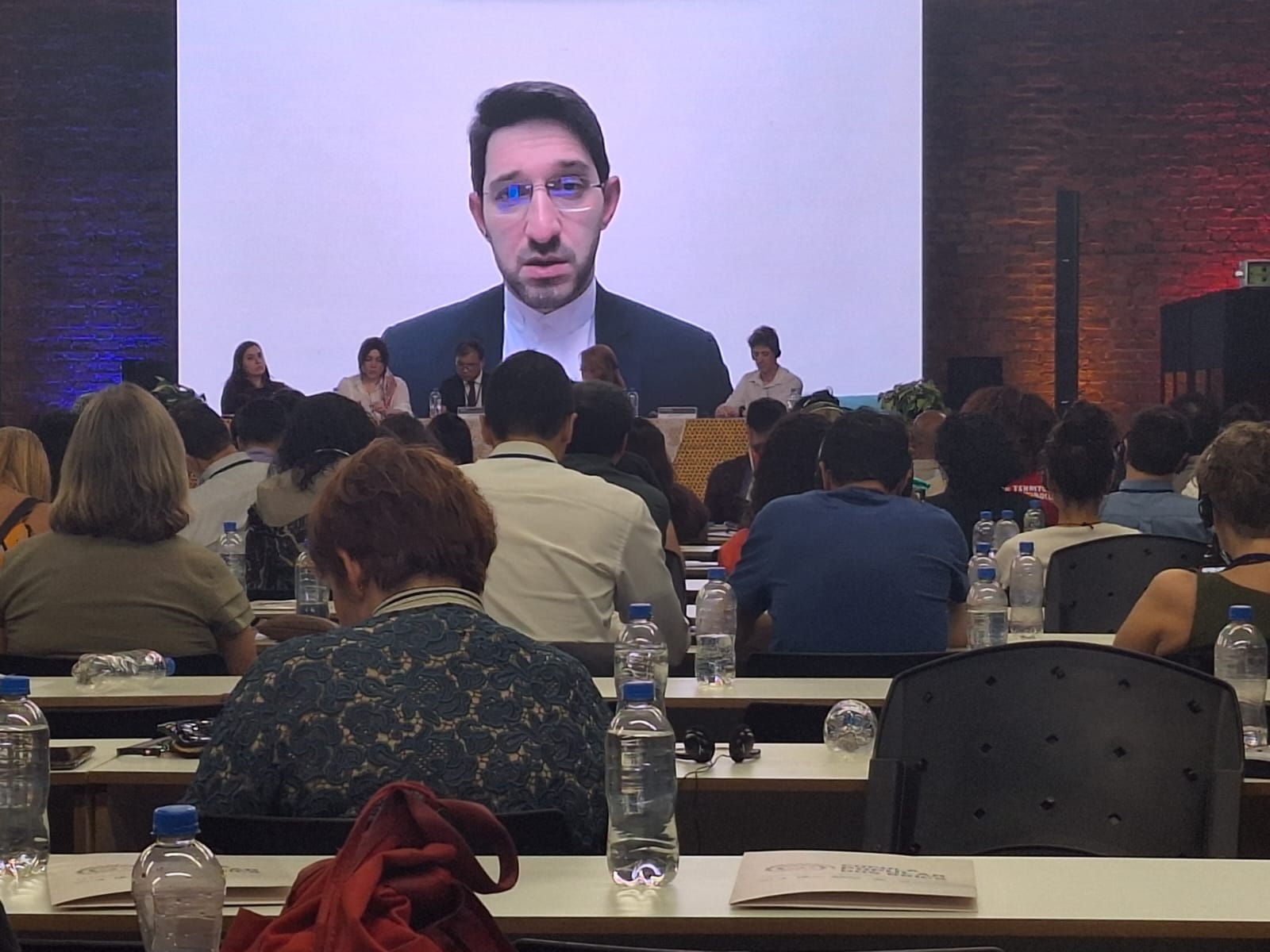
Joining the event virtually, Iranian analyst Hamid Reza Gholamzadeh argued that U.S. society has been losing its appetite for waging wars, especially after the fiascos in Iraq and Afghanistan, which cost enormous sums of money and countless American lives.
“That is why they now bet on trade wars. This is being seen around the world as a sign of weakness, decline, and a way to manipulate existing agreements in irregular ways,” he said.
Argentine physician Emmanuel Alvaréz, from the organization Movimiento Popular Nuestramérica, highlighted what he called U.S. President Donald Trump’s “blackmail” during Argentina’s recent legislative elections, when Trump conditioned the continuation of new loans on an electoral victory by Javier Milei’s far-right party.
“From Argentina, civil society is committed to building a fairer society, like the ones dreamed by Túpac Amaru, José de San Martín, and Simón Bolívar. We must ensure that the peoples, not only their states, become the protagonists,” he said.
Alvaréz closed his remarks by calling for solidarity with Haiti, one of the first nations to challenge Western imperialism – first French, then U.S. – and which, he stressed, has been punished for more than two centuries for doing so.
“Long live Haiti!” he declared, drawing applause from the audience.
Historic gathering
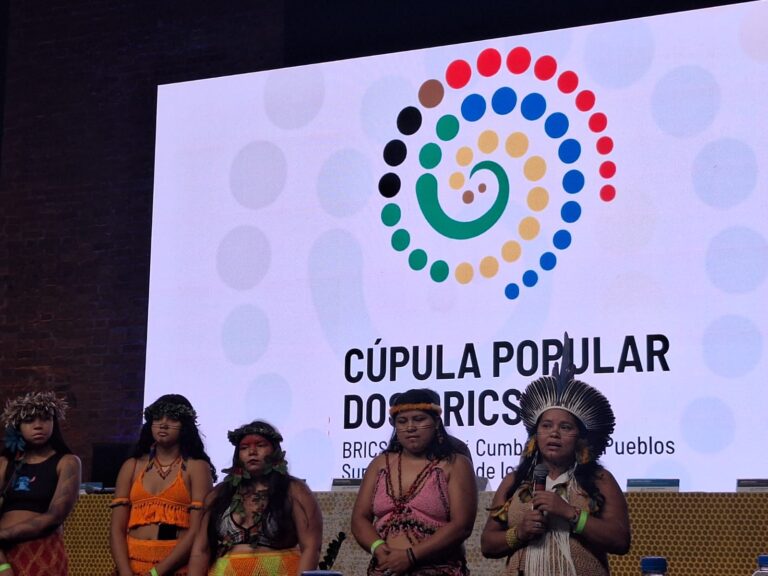
The first People’s Brics Summit, which begins this Monday (1), closes the Brics 2025 calendar – a year in which Brazil held the presidency of the bloc, which brings together Global South countries such as Russia, India, China, and South Africa. The four-day meeting in Rio de Janeiro aims to debate how civil society from member countries can expand its participation in global governance.
The event brings together more than 150 representatives of social movements from 21 countries, who will discuss issues such as economic cooperation, the construction of multipolarity – a new configuration of global geopolitics – and the push for de-dollarization in international trade. The integration of civil society into Brics decision-making was first established under Russia’s presidency in 2024 and consolidated by Brazil this year.