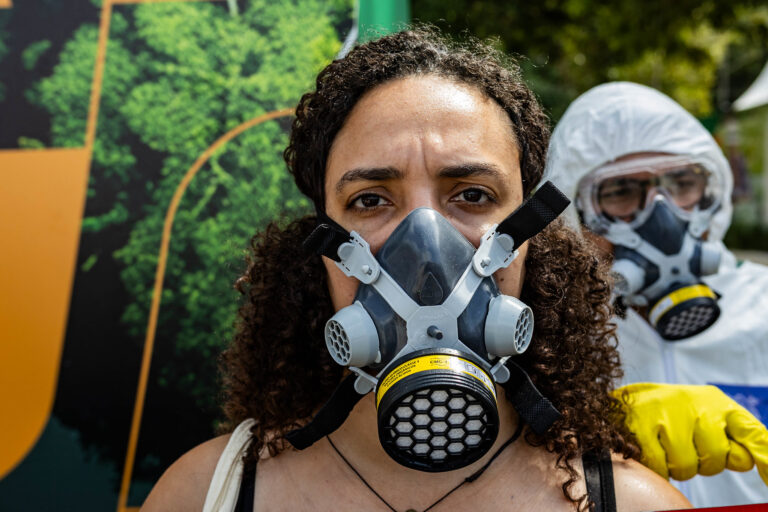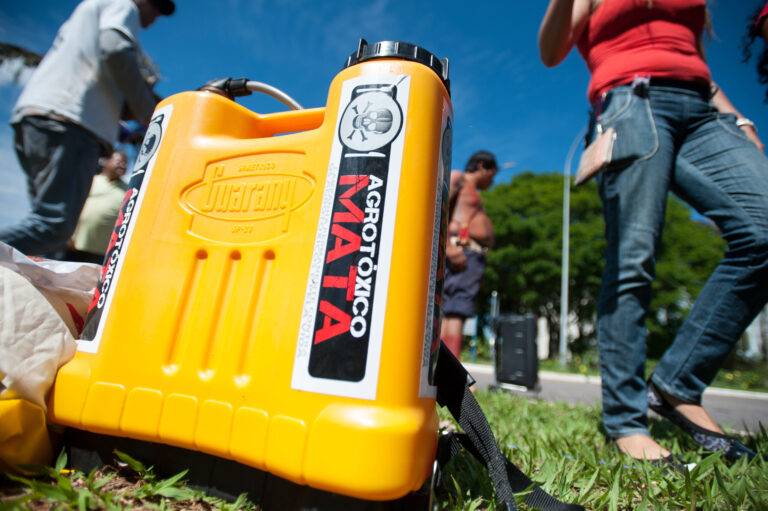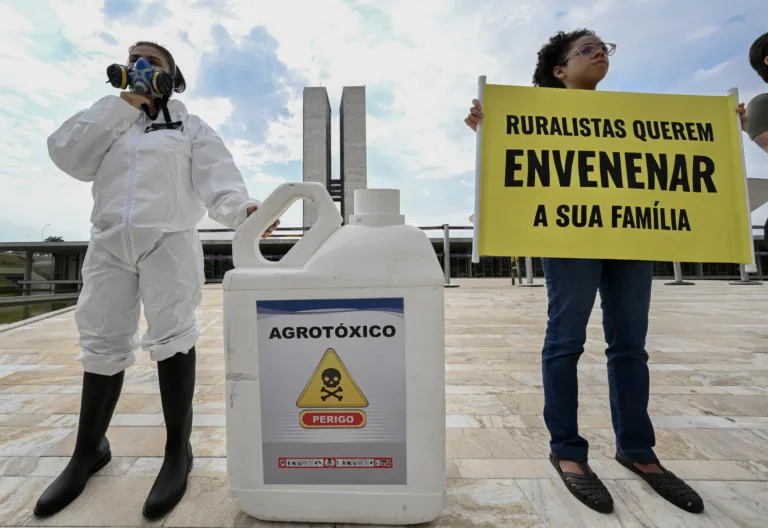
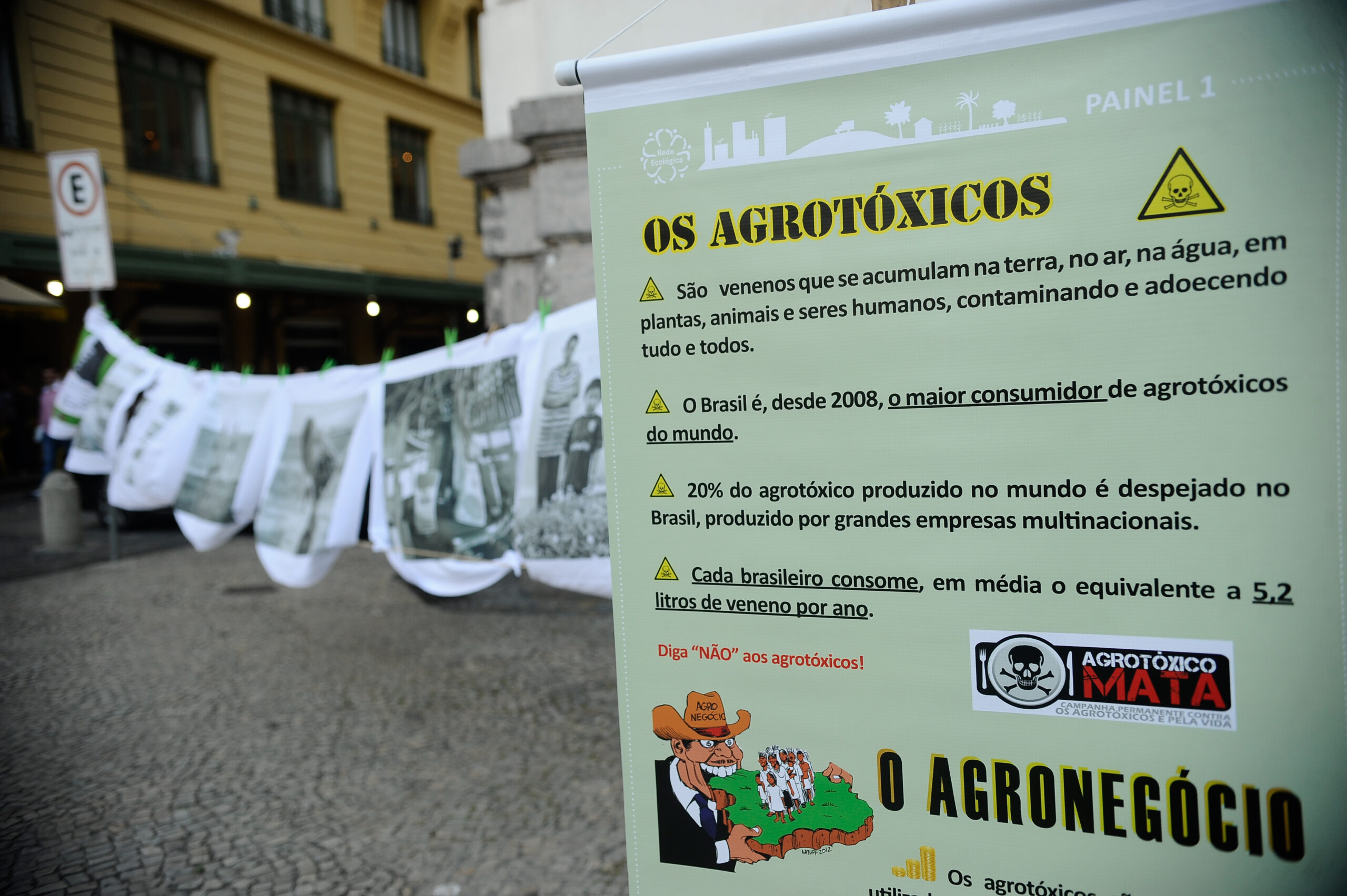
During the National Meeting of Brazil’s Landless Rural Workers’ Movement (MST) in Salvador, Bahia, this January, the Permanent Campaign Against Pesticides and For Life conducted a nationwide mapping initiative with agrarian reform settlers to identify areas affected by agrochemicals. The effort aimed to document methods of contamination, including aerial spraying by drones and aircraft, ground-level application, and what activists describe as “chemical warfare” in rural territories, the deliberate use of toxic substances to drive families and communities off their land.
“My beehives decreased by 40% after they started spraying poison near my area,” said Antônio, a beekeeper from Rio Grande do Sul state, as he marked his location on a map near the border with Uruguay.
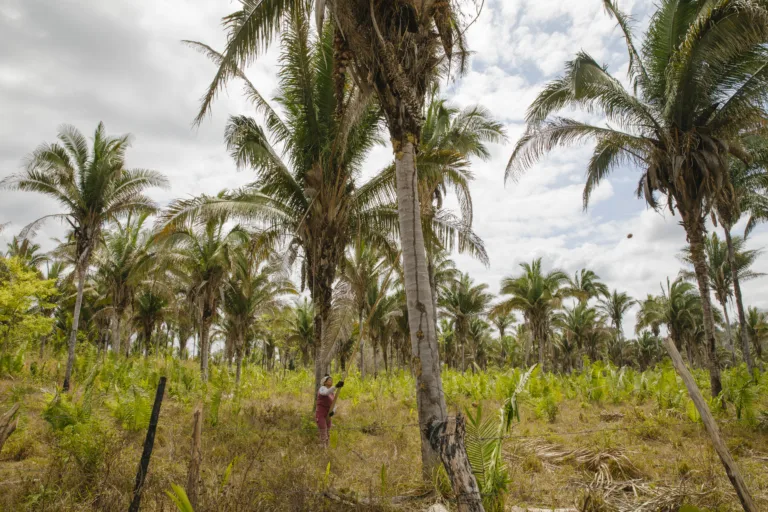
Further north, in the Vale do Mucuri region of Minas Gerais state, farmers have reportedly been prevented from selling their products at organic food markets due to contamination caused by irregular pesticide spraying by nearby landowners.
A Brasil de Fato report published in April 2025 revealed audio and video testimonies from farmers and local gatherers describing irregular spraying of toxic substances over their crops. In one recording, a farmer who asked to remain anonymous called for collective action by affected communities.
“Landowners don’t even live here, they come, spray poison, and leave. We need to organize and go to the local authorities because this is absurd,” she said. In another video, a worker pointed to dying plants after a drone sprayed pesticides from approximately 400 meters away. “It happened yesterday, and everything already looks like this. Even the weeds are dying. What are we going to do?” she asked.
These are only some examples of violations linked to pesticide use in Brazil. According to the Pastoral Land Commission (CPT), a Catholic-linked organization that monitors rural conflicts, more than 17,000 families were affected by pesticide-related incidents in 2024 alone. The primary targets were quilombola communities (Afro-Brazilian traditional territories), peasants, agrarian reform settlers and Indigenous peoples.
The CPT report recorded 276 incidents affecting 17,027 families across more than 3.3 million hectares. Compared to 2023, this represents a 763% increase in conflicts and a 582% increase in families affected by what activists describe as “chemical warfare” in rural areas.
New association seeks legal and technical support for affected communities
In response, the National Association of Poison Victims (Anvive) was created to provide technical guidance and legal assistance to those impacted by pesticide contamination. Although founded in 2025, the organization held its first official assembly on Wednesday (4), coinciding with World Cancer Day.
According to Anvive president Mirelle Gonçalves, the main goal is to offer legal, educational, political and technical support to individuals and communities affected, or at risk of being affected, by pesticide exposure throughout Brazil.
“The formalization of this association is an important step to ensure victims receive technical monitoring and legal support so they can defend their rights and seek fair compensation,” she said.
The organization also plans to promote lectures, seminars and training programs, as well as produce educational materials on the impacts of pesticides and agroecological alternatives, contributing to broader public debate.
According to the United Nations Food and Agriculture Organization (FAO), Brazil is currently the world’s largest consumer of pesticides. For Gonçalves, Anvive represents not only a pathway toward compensation but also another tool in the struggle against agrochemical use in the country.
“Financial compensation does not restore people’s health, but it can guarantee a minimum quality of life for those suffering the physical effects of pesticide poisoning,” she said. “As those responsible are held accountable financially, social pressure grows for stronger regulation of these substances.”
The organization’s charter defines it as a collective national space open to individuals, social movements, professionals, grassroots collectives and institutions. Forms of participation include formal membership, volunteer work, institutional partnerships and financial support for its initiatives.